Training with MLflow
Train and register a model while preserving data, parameters, metrics, and artifacts.
Activity responsibilities
| Activity | Responsibility |
|---|---|
ingest-data | Execute the ingest data stage and publish its declared outputs for downstream activities. |
validate | Execute the validate stage and publish its declared outputs for downstream activities. |
train | Execute the train stage and publish its declared outputs for downstream activities. |
evaluate | Execute the evaluate stage and publish its declared outputs for downstream activities. |
register-model | Execute the register model stage and publish its declared outputs for downstream activities. |
log-mlflow-run | Execute the log MLflow run stage and publish its declared outputs for downstream activities. |
Inputs
- Versioned dataset
- Training configuration
- Runtime image
Outputs
- Model artifact
- Evaluation report
- MLflow run
Provenance to preserve
- Dataset and code digests
- Parameters and metrics
- Resource placement
Source bundle
The executable workflow and its implementation files are maintained in the separate AkôFlow examples repository. The documentation intentionally keeps code, container recipes, generators, and validation scripts out of the narrative page.
Open the complete source bundle ↗Verified local execution
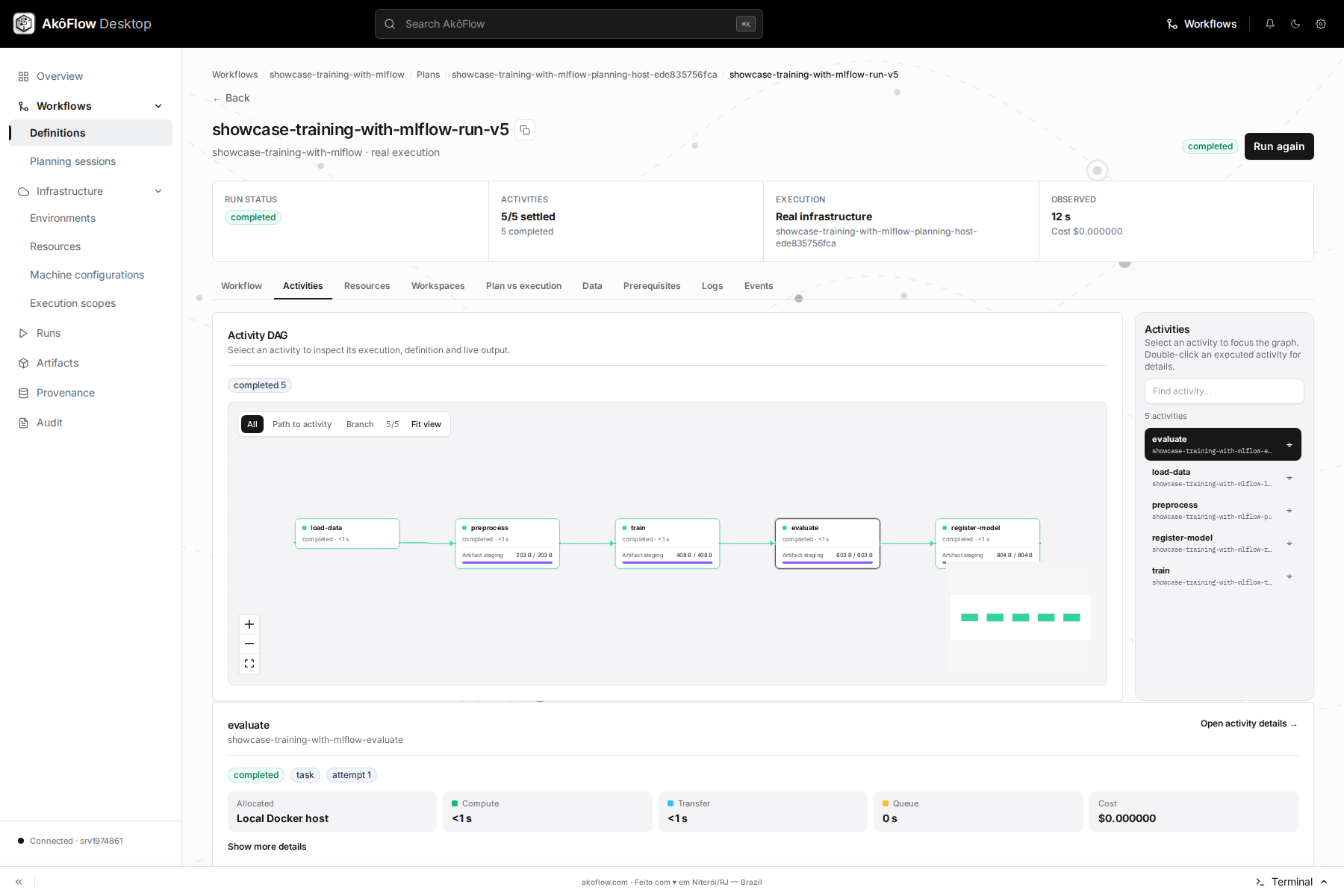
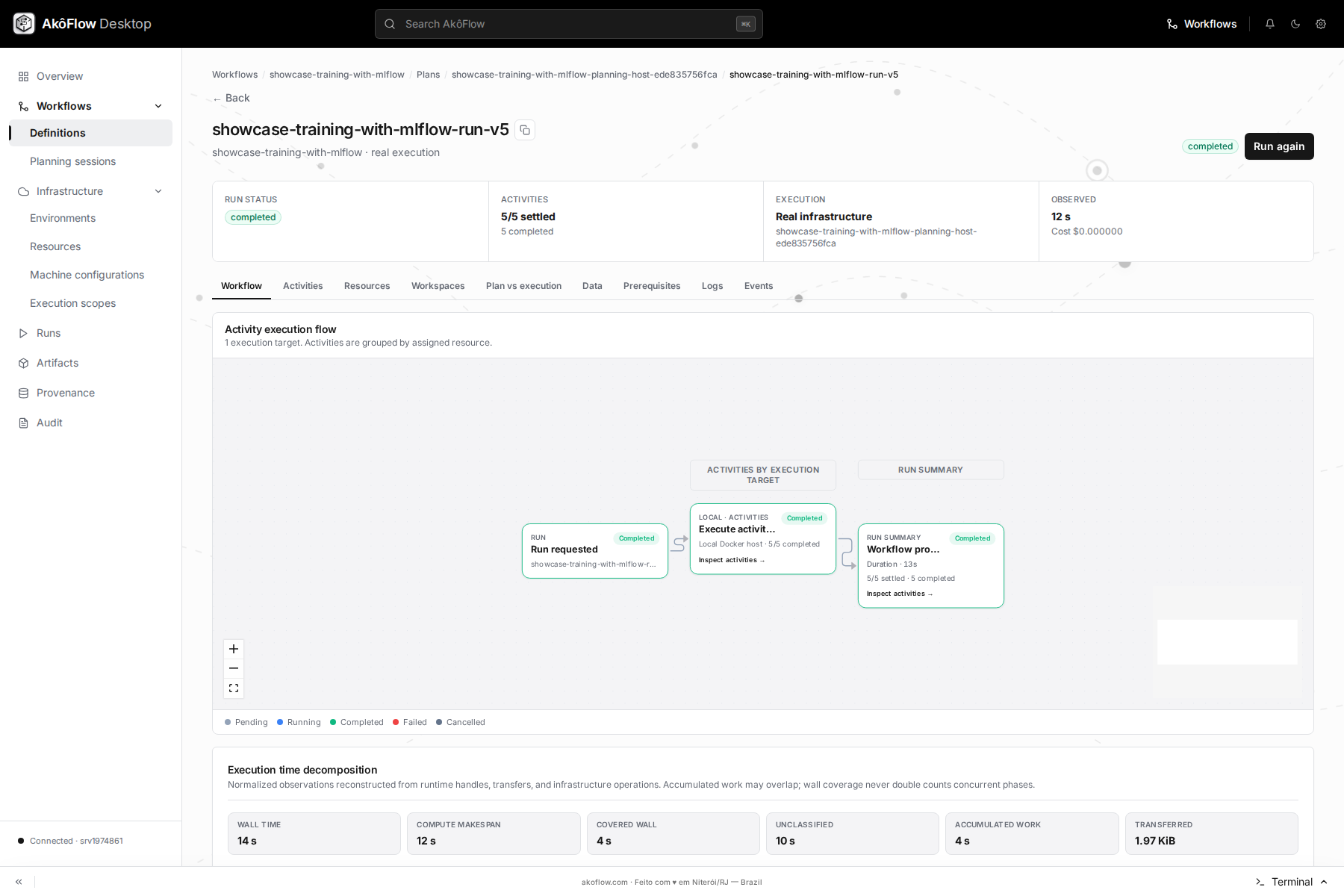
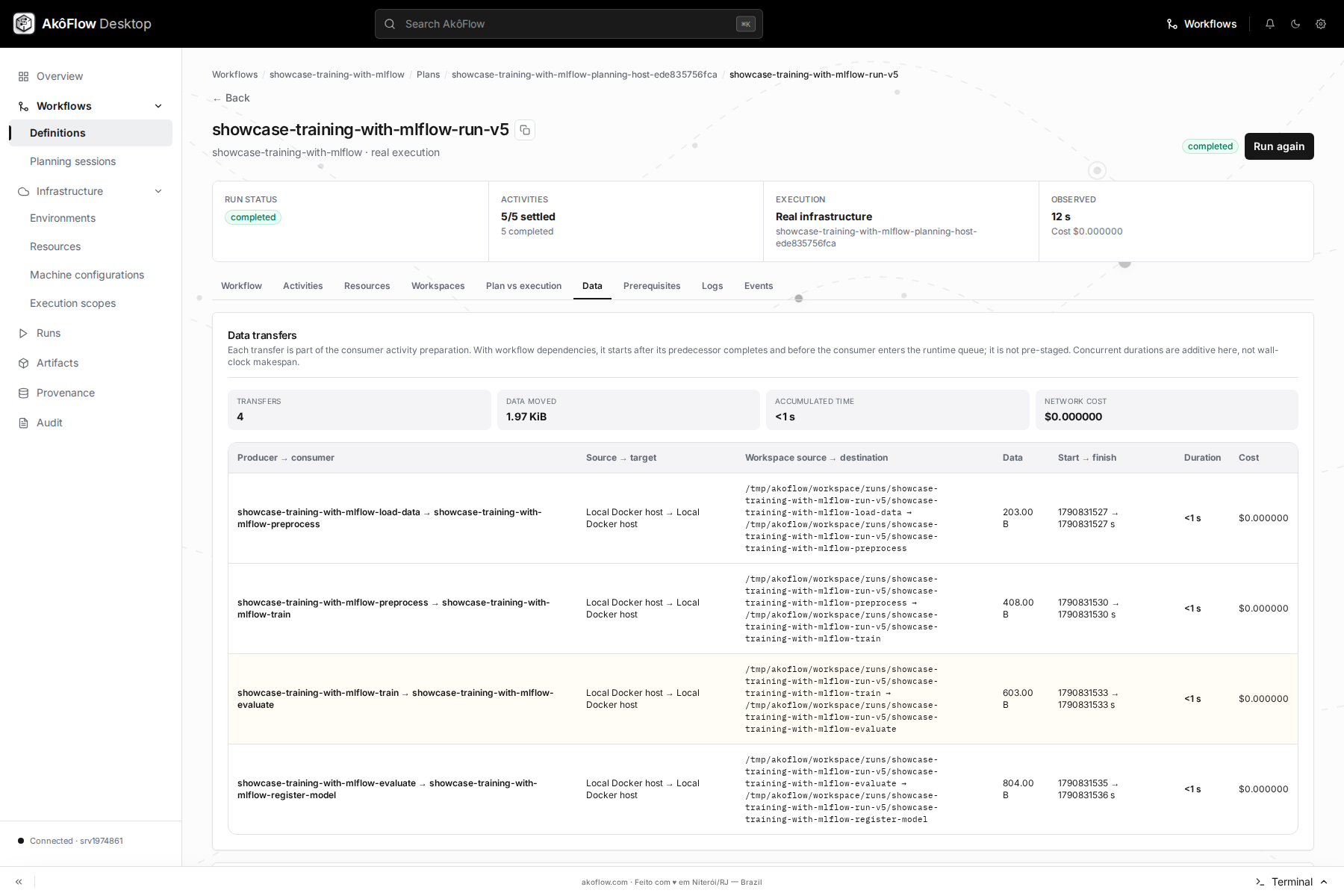
These captures and the output manifest were produced by the fixture's local Docker run and validator. They are published with the same bundle as the runnable files.
Execution considerations
Use GPU capacity for training and CPU capacity for validation or registration. MLflow remains an external service; AkôFlow records the activity that communicates with it.
AkôFlow boundary: the engine schedules, deploys, executes, transfers data, and records evidence. The ML or agent framework remains an implementation choice inside each activity.