🌊 UFFeScience Research Group at Tomorrow Blue Economy Niterói!
On November 25–26, the Tomorrow Blue Economy Niterói brought together leaders from the offshore supply chain, ports, marine biotechnology, government, academia, and investors. The event was an international exchange on the blue economy and the maritime energy transition.
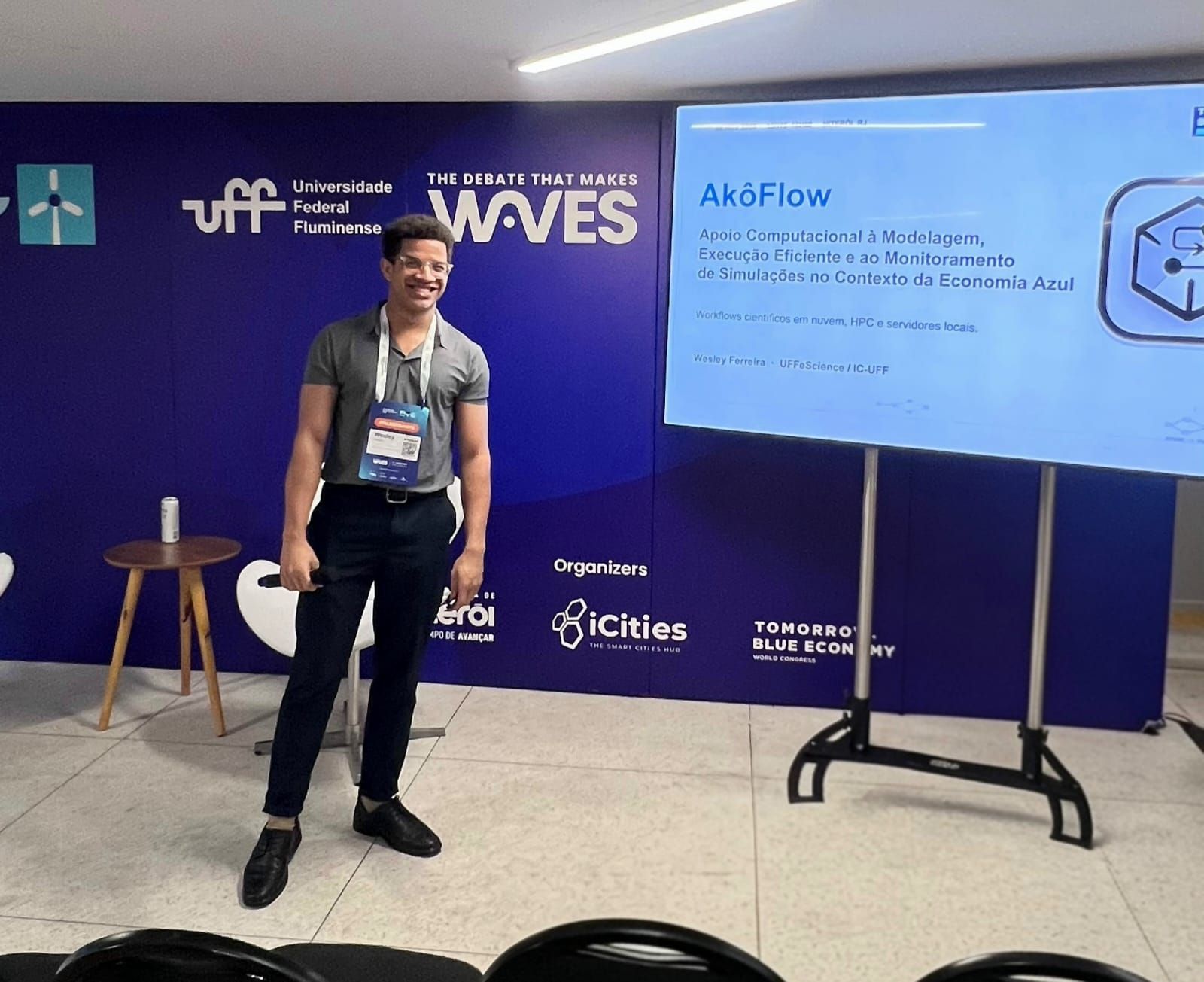
Our master's student Wesley Ferreira (IC-UFF) gave the talk "AkôFlow: computational support for modeling, efficient execution and monitoring of simulations in the blue economy."
AkôFlow is an open-source engine our group develops for containerized workflows across the computing continuum (cloud, edge, and on-premises infrastructure).
In the talk, Wesley showed how AkôFlow supports the whole lifecycle of a computational simulation: modeling the workflow, running it efficiently, and monitoring the experiments. Simulations like these matter to anyone who researches or works with the ocean.
Congratulations, Wesley, on a great presentation! Thank you to the organizers for making room for scientific computing in this conversation. 👏
🔗 Learn more about AkôFlow: https://lnkd.in/eqdx_3iK
#BlueEconomy #EnergyTransition #ScientificWorkflows #eScience #ScientificComputing #OpenSource #UFF #Niteroi
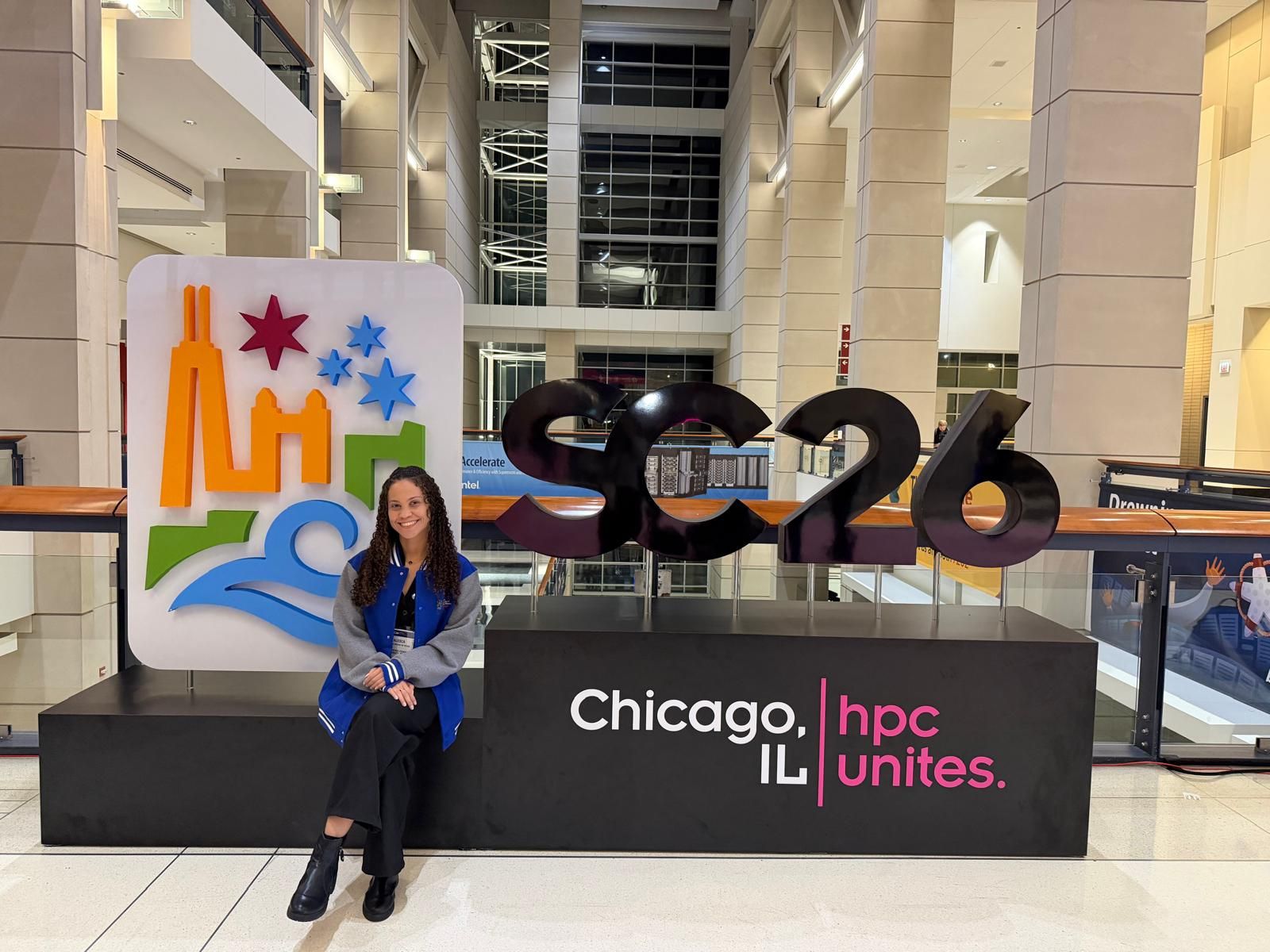
Tracking why AI agents do what they do: PROV-AGENT-LOOP at SC26!
Valesca Moura presented PROV-AGENT-LOOP: provenance for agentic loops at the AgenticAI4HPC workshop. Valesca is a master's student at UFF and is a member of the UFFeScience Research Group at Universidade Federal Fluminense (UFF).
As AI agents take on more of the work in scientific computing, a key question arises: how do we know why an agent did what it did? Agentic loop engineering designs how an agent works towards a goal by planning, acting, observing, evaluating, and deciding whether to continue, revise, or stop. PROV-AGENT-LOOP records that loop and connects each decision to execution evidence, including workflow tasks, jobs, models, datasets, and GPU telemetry.
Thanks to our co-authors and collaborators Gabriele Padovani, Daniel de Oliveira, Renan Souza, Rafael Ferreira da Silva for making this work possible.
A collaboration between Instituto de Computação UFF, the University of Trento, and Oak Ridge National Laboratory.
#SC26 #AgenticAI #HPC #Provenance #AgenticAI4HPC #Flowcept
🎓 How is AI changing the way we train computer scientists?
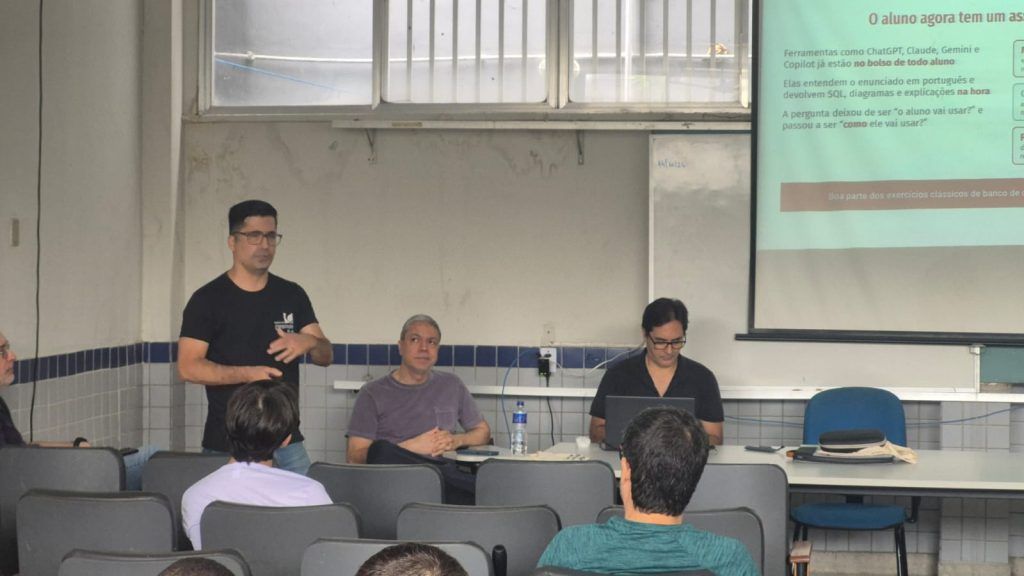
On October 23, Prof. Daniel de Oliveira (Instituto de Computação UFF , UFFeScience Research Group) joined the roundtable “The Impact of AI on Computer Science Education” at UFCI/RJ (former CEFET/RJ) Maracanã campus.
Prof. Oliveira’s talk looked at the positive and negative impacts of LLMs on teaching Principles of Databases, from data modeling all the way to query optimization.
He shared the stage with Leonardo Murta (UFF), Eduardo Bezerra (UFCI/RJ), Fabio Porto (LNCC), Eduardo Ogasawara (UFCI/RJ), and Diego Carvalho (UFCI/RJ), in a discussion that ranged from Software Engineering education and AI-supported learning practices to sovereign Portuguese-language models, scientific training, and the privacy and security issues raised by LLMs.
One message ran through the whole session: tools that can generate, explain, review, and test code do not replace conceptual mastery. Critical thinking, abstraction, modeling, result validation, and ethical judgment matter even more.
Thanks to the organizers (especially Prof. Eduardo Ogasawara)! 👏
📄 Slides and full coverage (in Portuguese): https://lnkd.in/dsnEhaDw
#UFFeScience #UFF #ComputerScience #AIinEducation #LLM #Databases
🎤 UFFeScience Research Group at SSCAD 2026!
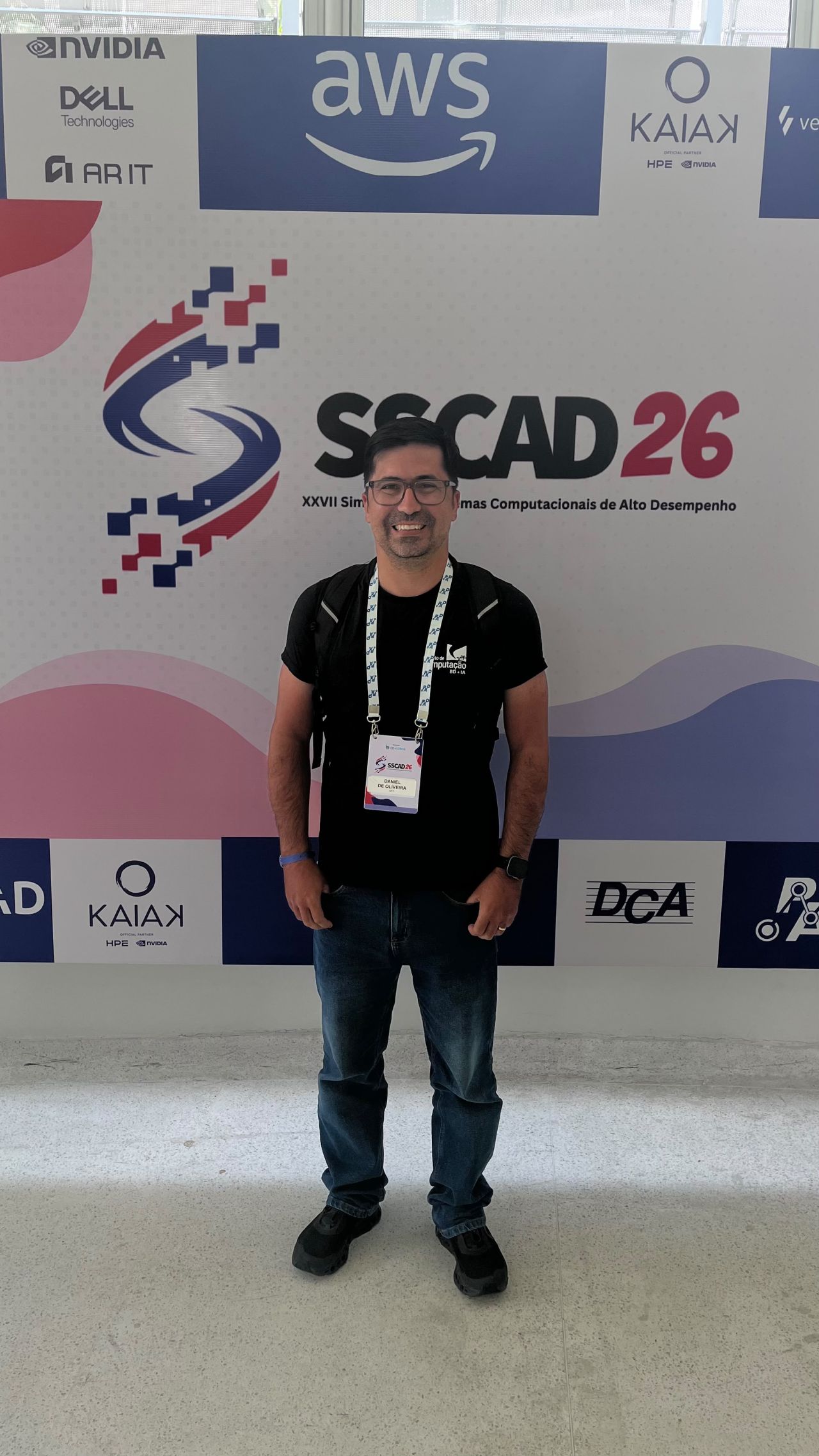
Prof. Daniel de Oliveira was in Natal this week for the Simpósio em Sistemas Computacionais de Alto Desempenho (SSCAD 2026), where he presented our paper:
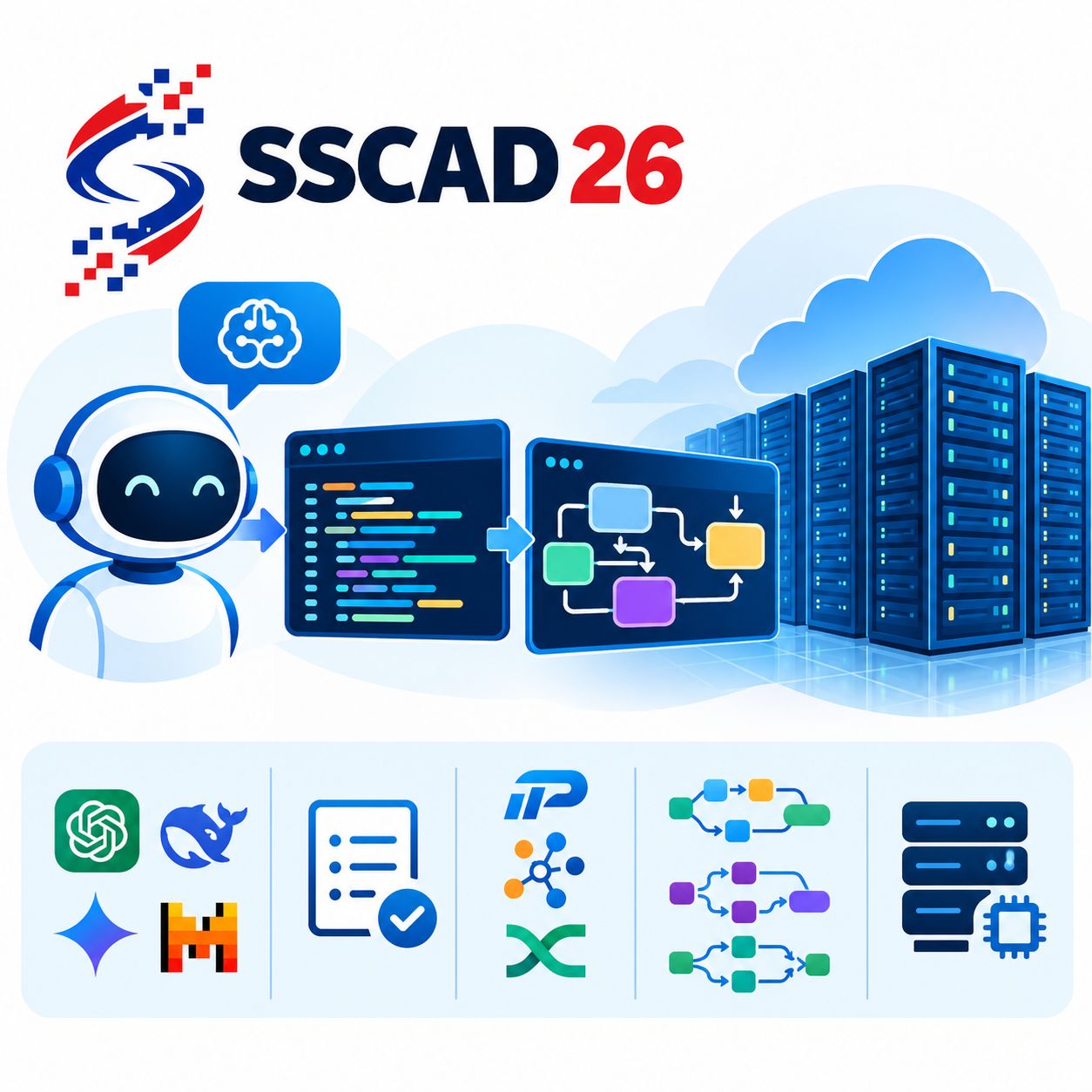
📄 “Can Large Language Models Engineer Parallel Workflows?”
Authors: Paula W., Liliane Kunstmann, Débora Pina, Marta Mattoso, Daniel de Oliveira
LLMs are increasingly used to write code, but can they build correct parallel scientific workflows? In this paper, we evaluate how well LLMs compose workflows for parallel workflow systems such as Parsl, PyCOMPSs, and Nextflow, and discuss where they succeed and where human expertise still matters.
The paper is part of Paula Woyames’s Master’s research, and we’re already working on the next steps of this line of work. Stay tuned! 🚀
Thanks to the SSCAD organizers and to everyone who joined the session for the great discussion.
🔗 Read the paper: https://lnkd.in/dekjEUjj
#SSCAD2026 #HPC #LLM #ScientificWorkflows #ParallelComputing #AI #eScience #UFF
Can LLMs recognize ableism? Our latest work at KDMiLe! ⛏️📊
Another paper from the UFFeScience Research Group, in collaboration with MeLLL@UFF, at KDMiLe - Knowledge Discovery, Mining and Learning 2026!
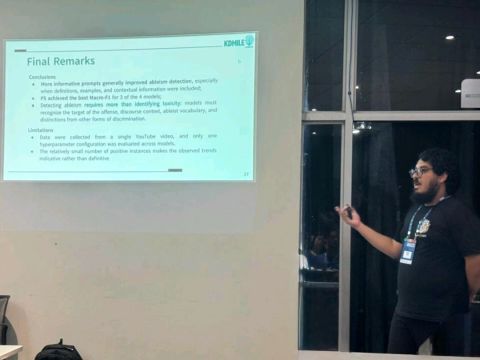
Yesterday in Cuiabá, Gabriel Assis presented our paper “Beyond Toxicity: Evaluating Language Models for Ableism Detection in Online Social Media” at KDMiLe 2026.
Ableism on social media isn’t always explicit. It often shows up as stereotypes, jokes, and comments that traditional toxicity detection approaches miss.
This paper is part of Daniele Pimenta's undergrad final project and analyzes how LLMs handle this task when given more context about the events being analyzed, one piece at a time.
👥 Authors: Annie Amorim, Gabriel Assis, Daniele Pimenta, Débora Pina, Aline Paes, and Daniel de Oliveira.
Congratulations to the whole team! 👏
📄 Read the paper: https://lnkd.in/de9Fh63e
#KDMiLe #LLMs #NLP #Ableism #Accessibility #ArtificialIntelligence #UFF #UFFeScience #MeLLL
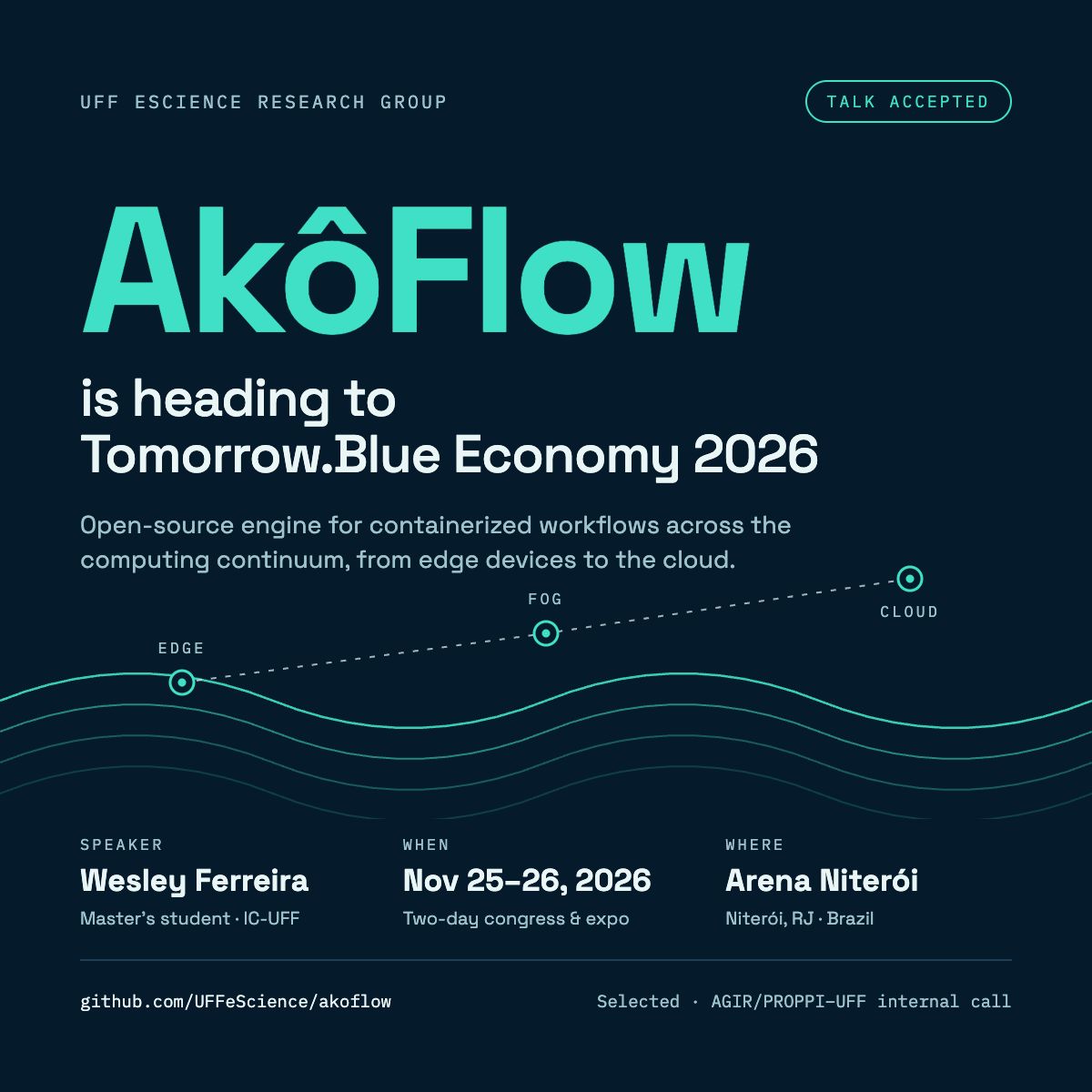
🌊 AkôFlow is heading to Tomorrow.Blue Economy 2026!
We are happy to share that our student, Wesley Ferreira, had his talk proposal selected in the AGIR/PROPPI–UFF internal call for proposals for Tomorrow.Blue Economy, taking place November 25–26, 2026, at Arena Niterói.
Wesley will present AkôFlow, the open-source engine developed by the UFFeScience Research Group for running containerized workflows across the computing continuum, from edge devices to the cloud.
Data-intensive problems, including those at the heart of the ocean economy, increasingly depend on infrastructure that can move computation to where the data lives. We are excited to bring this discussion to one of the world's largest blue economy events, right here in Niterói.
Congratulations, Wesley! 👏
And many thanks to AGIR and PROPPI/UFF for the opportunity.
🔗 AkôFlow on GitHub: https://lnkd.in/eqdx_3iK
#AkôFlow #BlueEconomy #TomorrowBlueEconomy #eScience #UFF #Workflows #CloudComputing #EdgeComputing #OpenSource #Niterói
📢 Paper accepted at SSCAD 2026!
We are happy to announce that our paper “Can Large Language Models Engineer Parallel Workflows?” has been accepted at SSCAD 2026! 🎉
The paper is by Paula W. (IC/UFF), Liliane Kunstmann (UFRRJ), Débora Pina (Barcelona Supercomputing Center), Marta Mattoso (COPPE/UFRJ), and Daniel de Oliveira (IC/UFF).
Developing a workflow that actually runs in parallel requires knowing the specification language and execution model of a specific workflow system, and many domain scientists don’t have that expertise. LLMs promise to lower this barrier, but existing evaluations mostly stop at whether the generated code looks right. We wanted to know whether it runs, and whether it runs in parallel.
We evaluated four LLMs (GPT-5.5, DeepSeek-V4-Flash, Command-A-Plus, and Gemma-4-31B-IT) on two tasks:
Specification: writing a workflow from a natural-language description.
Conversion: translating an existing workflow from one system to another.
The study covered three workflow systems (Parsl, PyCOMPSs, and Nextflow), three workflows (K-Means, MatMul, and a GROMACS molecular dynamics simulation), and zero-shot and few-shot prompting. We executed all 600 generated specifications in a real environment.
The takeaway is that LLMs can help with workflow engineering, but evaluations that only check whether code runs overestimate how useful the output really is in HPC and cloud environments.
Congratulations to Paula and to all co-authors! 👏
💻 Prompts, specifications, and scripts: https://lnkd.in/dpCBrkUV
#UFFeScience #UFF #SSCAD2026 #LLM #ScientificWorkflows #HPC #ParallelComputing #Parsl #PyCOMPSs #Nextflow #AI4Science
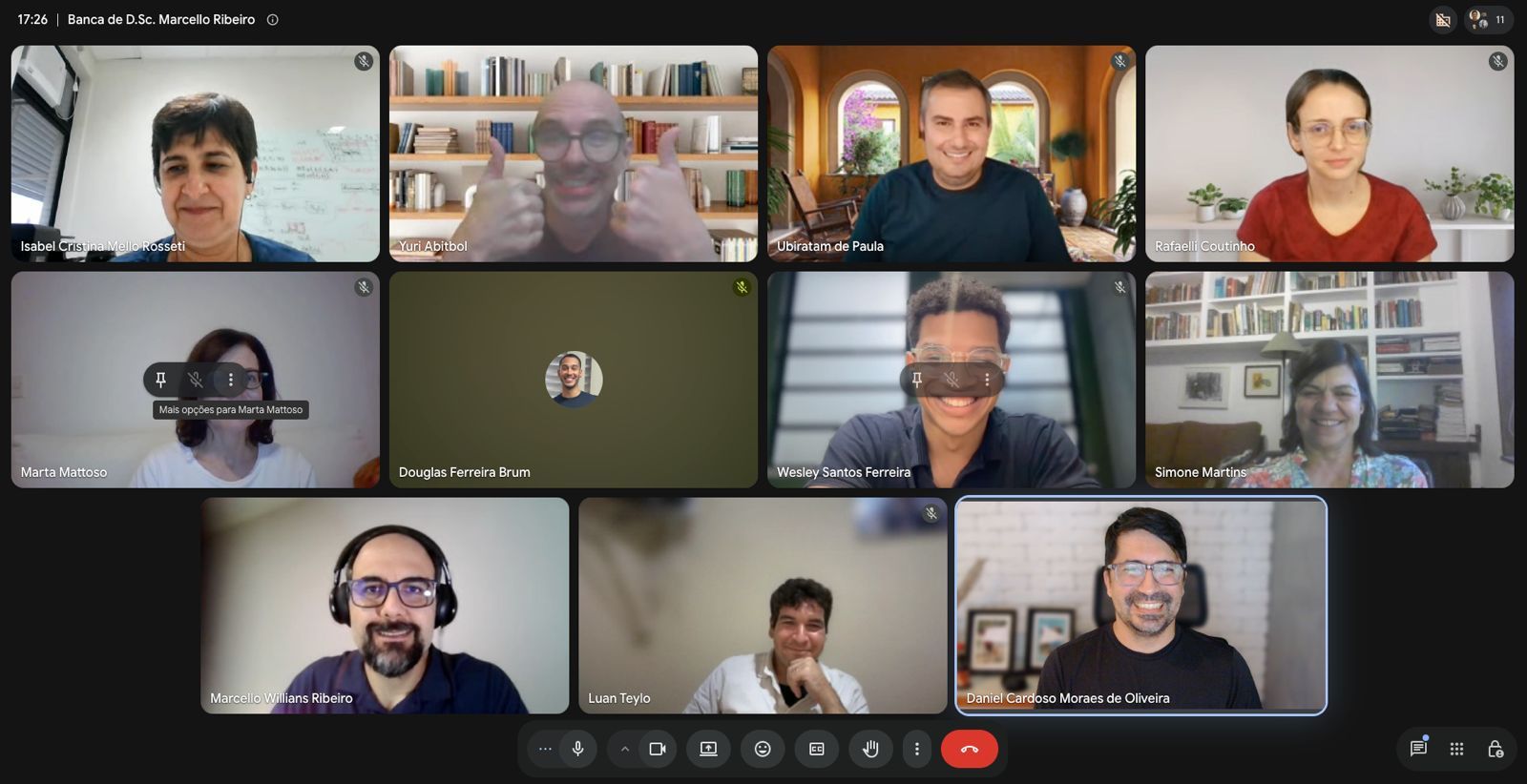
We are proud to announce that Marcello Ribeiro successfully defended his Ph.D. thesis, “An Approach for Scheduling Scientific Workflows in Hybrid VM–Serverless Cloud Environments,” on October 6 and is now the newest Doctor at the Instituto de Computação at Universidade Federal Fluminense (IC/UFF).
Workflows increasingly execute on elastic cloud infrastructures, where serverless functions now coexist with traditional Virtual Machines. Each model has its own performance, pricing, and operational constraints, so a scheduler must decide not only when each activation runs, but also where. Marcello’s thesis tackles this underexplored heterogeneous scheduling problem with three complementary contributions:
🔹 Denethor, a provenance capture system for workflows running on serverless platforms, providing empirical execution time and cost data;
🔹 FLEXE+IP, an integer programming model that formulates the scheduling problem;
🔹 FLEXE+, a GRASP-based heuristic with VND local search that jointly chooses the execution environment and the execution order, balancing makespan and financial cost.
Experiments with synthetic workflows and a large-scale real bioinformatics workflow show that FLEXE+ reduces makespan or cost depending on the prioritized objective, while reaching near-optimal solutions on instances where the exact model is tractable.
Marcello, thank you for your dedication and for all the contributions you brought to our group over these years. Well deserved!
Marcello was advised by Profs. Daniel de Oliveira and (UFF) Isabel Rosseti (UFF). Our thanks to the examiners for the insightful discussion: Simone Martins, Yuri Frota (UFF), Marta Mattoso (COPPE/UFRJ), Luan Teylo (INRIA), Rafaelli Coutinho (Cefet/RJ), and UBIRATAM CARVALHO DE PAULA JUNIOR (UFRRJ).
#PhD #CloudComputing #Serverless #ScientificWorkflows #Scheduling #Metaheuristics #UFF #eScience
📢 New paper at SIBGRAPI 2026!
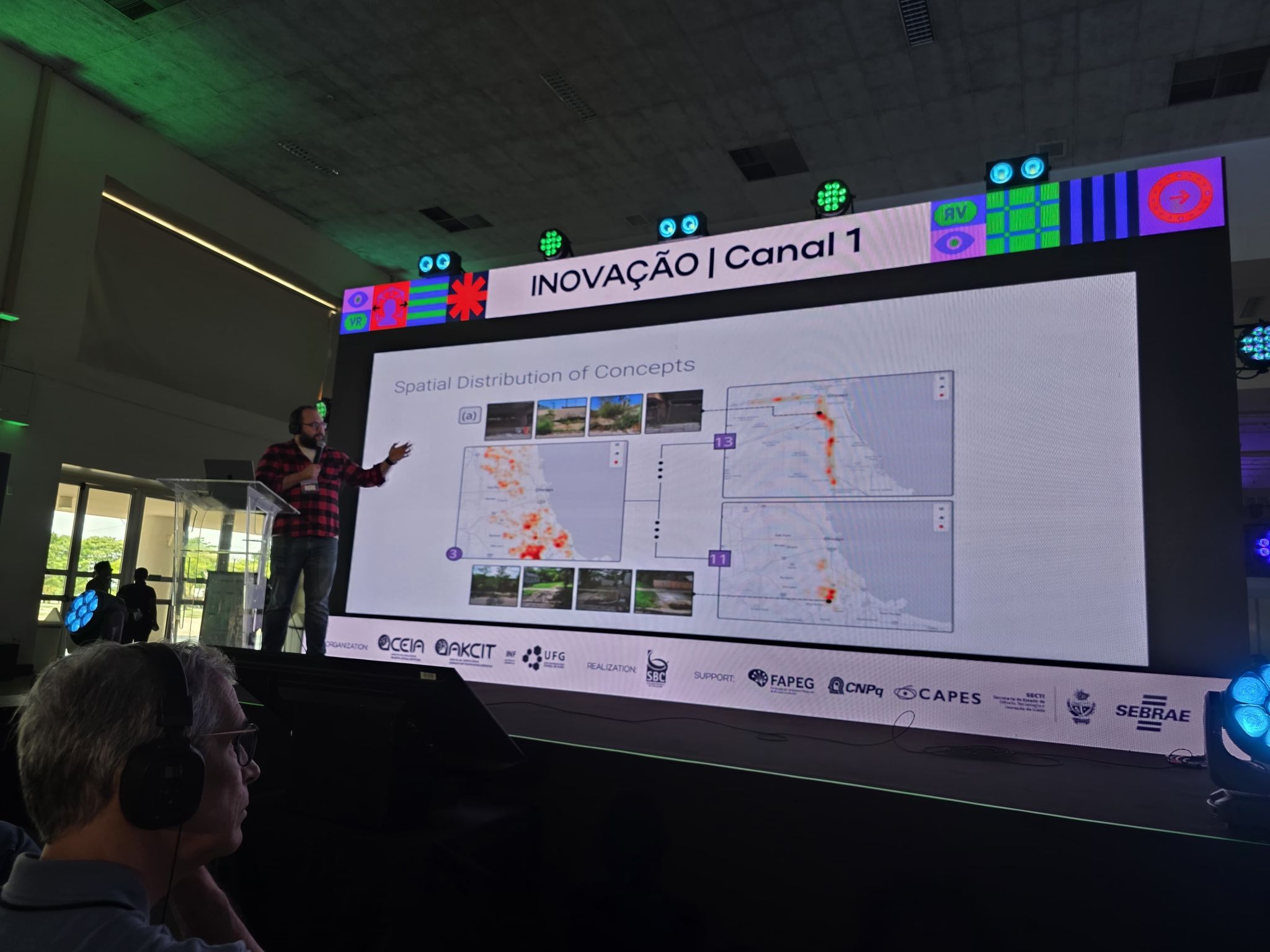
We're happy to share "Reveal: A Provenance-Aware System for Multimodal Urban Data Exploration," presented at SIBGRAPI 2026.
Reveal is a visual analytics system that tackles:
🔎 Multimodal text and image search over a shared CLIP embedding space
🧩 Set operations to combine and refine urban concepts
🗺️ Linked views: embedding plots, image galleries, word clouds, and spatial heatmaps
🧭 An exploration diagram that captures analytical provenance, making each analysis transparent, reproducible, and reusable
In case studies with an urban planner, Reveal helped expand the Project Sidewalk accessibility taxonomy with 11 new fine-grained categories, covering more than 1,600 newly labeled images.
We then reused the captured provenance as a "semantic blueprint" to replicate the analysis on Chicago street-level imagery.
This work continues our research line on provenance and scientific data management, applied here to urban visual analytics. It is a collaboration between the UFFeScience Research Group (Daniel de Oliveira, Aline Paes, and Marcos Lage), UIC (Leonardo Ferreira and Fabio Miranda), FGV (Joao Rulff), and UC Berkeley (Maryam Hosseini), and it builds on Leonardo Ferreira's master's work.
Congratulations to all co-authors!
💻 Code and tutorial: https://lnkd.in/dGzXh5V9
#SIBGRAPI2026 #eScience #UFF #Provenance #VisualAnalytics #UrbanComputing #MultimodalData
On September 17, Prof. Aline Paes (MeLLL@UFF) and Prof. Daniel de Oliveira (UFFeScience Research Group) had the pleasure of giving a talk at CEFET/RJ – Campus Maria da Graça.
They presented "Finding the Unexpected: Machine Learning for the Next Generation of Astronomy," based on Camila Lopes's PhD research.
Modern telescopes produce so much data that analyzing everything with traditional methods is becoming impossible. In the talk, they showed how machine learning can help astronomers find unusual and potentially important objects hidden in huge datasets. Their focus was Federated Learning, an approach that lets different computers train models together without moving all their data to one central location. Using observations from the Dark Energy Survey (DES), they tested how this approach could support future projects like the Legacy Survey of Space and Time (LSST), comparing configurations by speed, reliability, and cost.
Huge thanks to the CEFET/RJ students for their great questions and genuine curiosity. It's inspiring to see young people so interested in our work!
Thanks also to Prof. Carlos Eduardo Pantoja and CEFET/RJ for hosting us and welcoming us so warmly.
#MachineLearning #FederatedLearning #Astronomy #DataScience #eScience #UFF #CEFETRJ
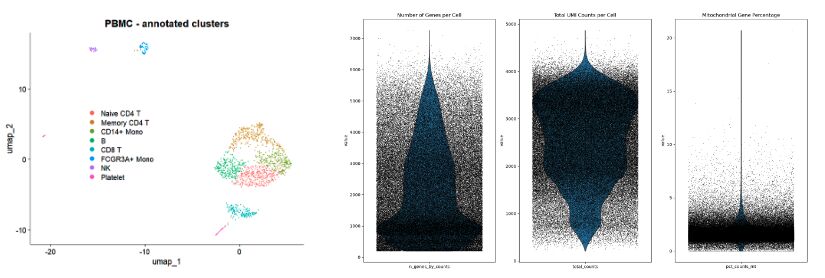
Happy to share that our paper entitled "A Workflow for Automated Cell-Type Annotation in scRNA-seq Using LLMs and Graph-Based Community Detection" has been accepted at the Brazilian Symposium on Bioinformatics (BSB 2026)!
The paper proposes CellLens+, which is a workflow for automated cell-type annotation that brings together graph-based community detection, deterministic molecular inference, and Large Language Models. It detects transcriptionally coherent cell populations, identifies cluster-specific marker genes, and assigns cellular identities through a quantitative scoring framework.
Authors: Layse Gomes Castro, João Vitor Moraes, and Daniel de Oliveira.
Congratulations, and see you at BSB 2026 in Ribeirão Preto!
#Bioinformatics #SingleCell #scRNAseq #LLM #BSB2026 #UFF
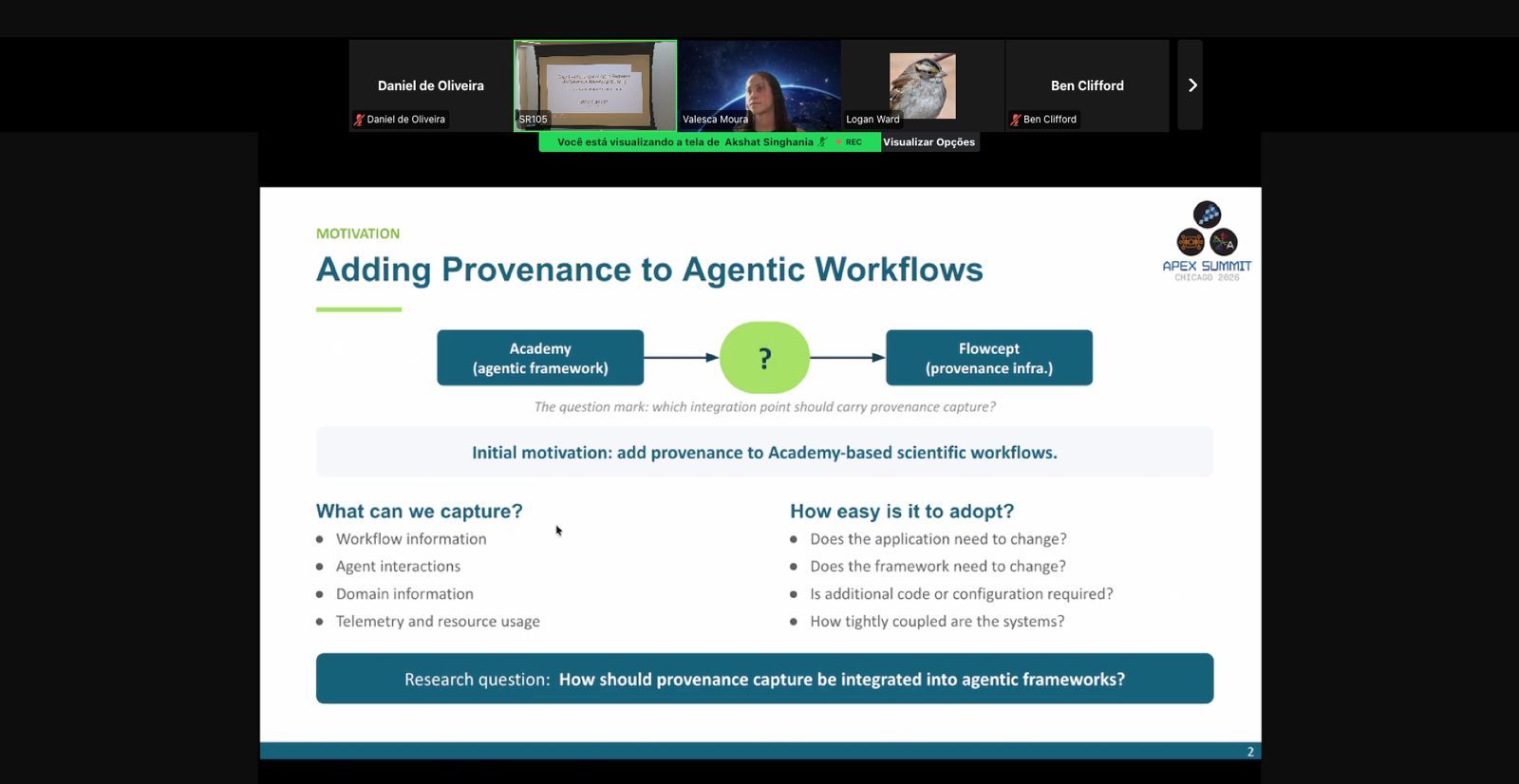
Congratulations to Valesca Moura, who presented the work "Instrumentation vs. Observability: Provenance Capture Trade-offs in Agentic Workflows" at the APeX Summit 2026 (Academy, Parsl, Globus Compute).
As AI agents increasingly take part in scientific workflows, understanding what they did, why, and with which data becomes important for trust and reproducibility. This work looks at a practical question at the heart of this: when capturing provenance in agentic workflows, what do we gain and what do we pay when we instrument the code explicitly versus relying on observability mechanisms?
And there's more good news! The paper has been accepted at WISDOM @ IEEE eScience 2026 and will be published soon.
This was a truly collaborative effort, and we are grateful to work with such a great team: Valesca Moura, Amal Gueroudji, Daniel Rosendo, Ben Clifford, Kyle Chard, Rafael Ferreira da Silva, Daniel de Oliveira and Renan Souza.
Looking forward to what comes next.
🔗 Program and slides: https://lnkd.in/d9c5draW
#eScience #Provenance #AgenticAI #ScientificWorkflows #Observability
🇧🇷 pt-br
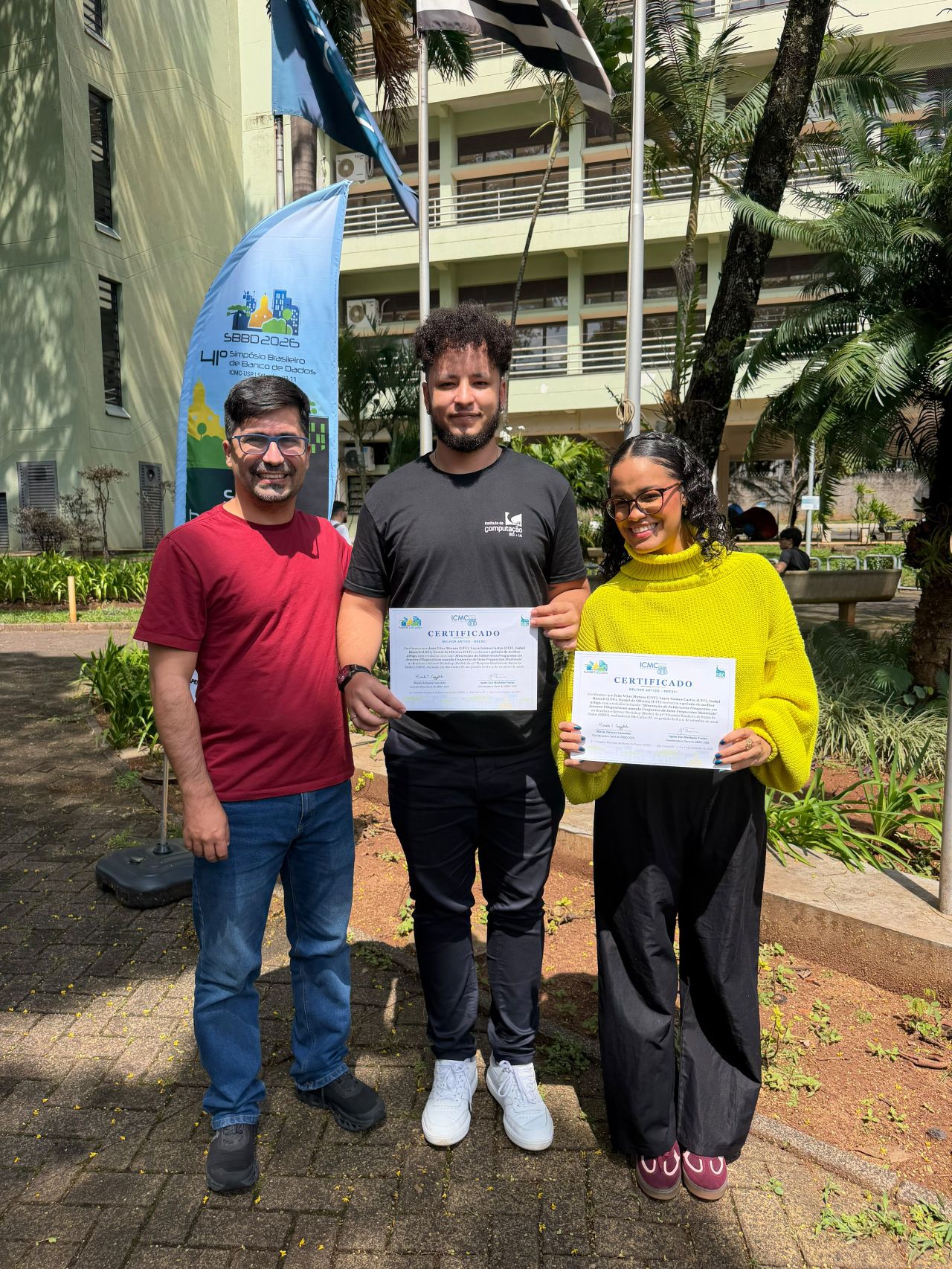
Mais uma boa notícia direto do Brazilian Symposium on Databases (SBBD): nosso artigo recebeu o prêmio de Melhor Artigo do XX Brazilian e-Science Workshop (BreSci 2026)! 🏆
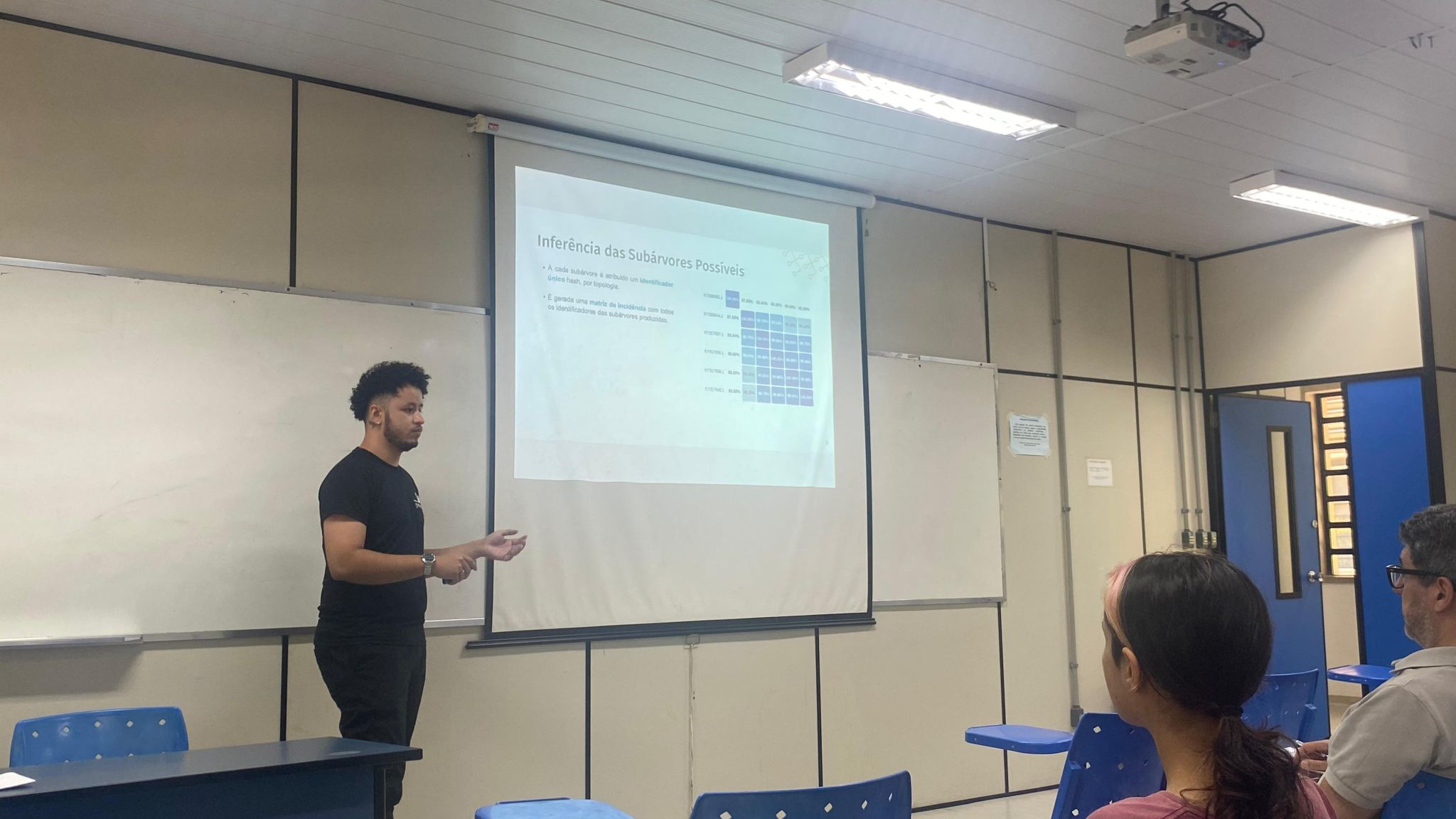
"Mineração de Subárvores Frequentes em Árvores Filogenéticas usando Conjuntos de Itens Frequentes Maximais" é fruto do trabalho de João Vitor Moraes e Layse Gomes Castro, em parceria com Isabel Rosseti e Daniel de Oliveira, todos do Instituto de Computação UFF.
O ponto de partida é que métodos diferentes produzem árvores filogenéticas distintas a partir dos mesmos dados, e as árvores de consenso — a saída usual — acabam por esconder conflitos topológicos.
O PhyloTreeMiner propõe uma alternativa ao consenso: minerar subárvores frequentes, identificando padrões topológicos recorrentes com base no valor de suporte. Modelamos o problema como mineração de conjuntos de itens frequentes maximais (FPMax), o que reduz o custo computacional, e armazenamos os resultados no Neo4j, permitindo consultas que combinam topologia e metadados.
Parabéns, João Vitor e Layse — o prêmio é de vocês! 👏
📄 Artigo: https://lnkd.in/ddQNTUFB
#BreSci2026 #eScience #Filogenia #Bioinformática #DataMining #Neo4j #UFF
🇺🇸 en-us
More good news from Brazilian Symposium on Databases (SBBD): our paper received the Best Paper Award at the XX Brazilian e-Science Workshop (BreSci 2026)! 🏆
"Frequent Subtree Mining in Phylogenetic Trees using Maximal Frequent Itemsets" is the work of João Vitor Moraes and Layse Gomes Castro, together with Isabel Rosseti and Daniel de Oliveira, all from IC/UFF.
Different methods produce different phylogenetic trees from the same dataset, and consensus trees—the usual way out—tend to hide topological conflicts and discard relevant evolutionary signal.
PhyloTreeMiner offers an alternative to consensus: mining frequent subtrees to identify recurring topological patterns based on support values. We model the problem as maximal frequent itemset mining (FPMax), which substantially reduces the computational cost, and store the results in Neo4j, enabling queries that combine topology and metadata.
Congratulations, João Vitor and Layse — this award is yours! 👏
📄 Paper: https://lnkd.in/ddQNTUFB
#BreSci2026 #eScience #Phylogenetics #Bioinformatics #DataMining #Neo4j #UFF
🇧🇷 pt-br
O UFFeScience Research Group desembarcou em São Carlos para o Brazilian Symposium on Databases (SBBD) 2026.
Foram apresentados 11 trabalhos, entre artigos completos, artigos curtos, demonstrações e workshops, abrangendo temas como proveniência de workflows agênticos, IA responsável, arquiteturas HTAP, continuum computacional, grafos de conhecimento e bioinformática.
E dois reconhecimentos que coroaram a semana:
🏆 Melhor Artigo do BreSci 2026
🏅 Menção Honrosa de artigos completos no SBBD 2026
Mas o número que mais importa não é nenhum desses, é o nosso grupo. Alunos e alunas que transformaram noites de experimento em resultado, coautores e parceiros de outras instituições que somaram conosco, e uma organização impecável do SBBD e do BreSci que fez tudo acontecer.
Obrigado a cada um de vocês. 👏
Os artigos estão todos nos comentários. 👇
#SBBD2026 #BreSci2026 #eScience #UFF #BancoDeDados
🇺🇸 en-us
The UFFeScience Research Group landed in São Carlos for Brazilian Symposium on Databases (SBBD) 2026.
Eleven works were presented as full papers, short papers, a demo, and workshop contributions, covering topics such as provenance for agentic workflows, responsible AI, HTAP architectures, the computing continuum, knowledge graphs, and bioinformatics.
Plus two recognitions that capped the week:
🏆 Best Paper Award at BreSci 2026
🏅Full Paper Honorable Mention at SBBD 2026
But the number that matters most isn't any of those, it's our team. The students who turned late-night experiments into results, the co-authors and partners from other institutions who joined us, and the SBBD and BreSci organizers who made it all run flawlessly.
Thank you, every one of you 👏
All the papers are in the comments. 👇
#SBBD2026 #BreSci2026 #eScience #UFF #Databases
🇧🇷 pt-br
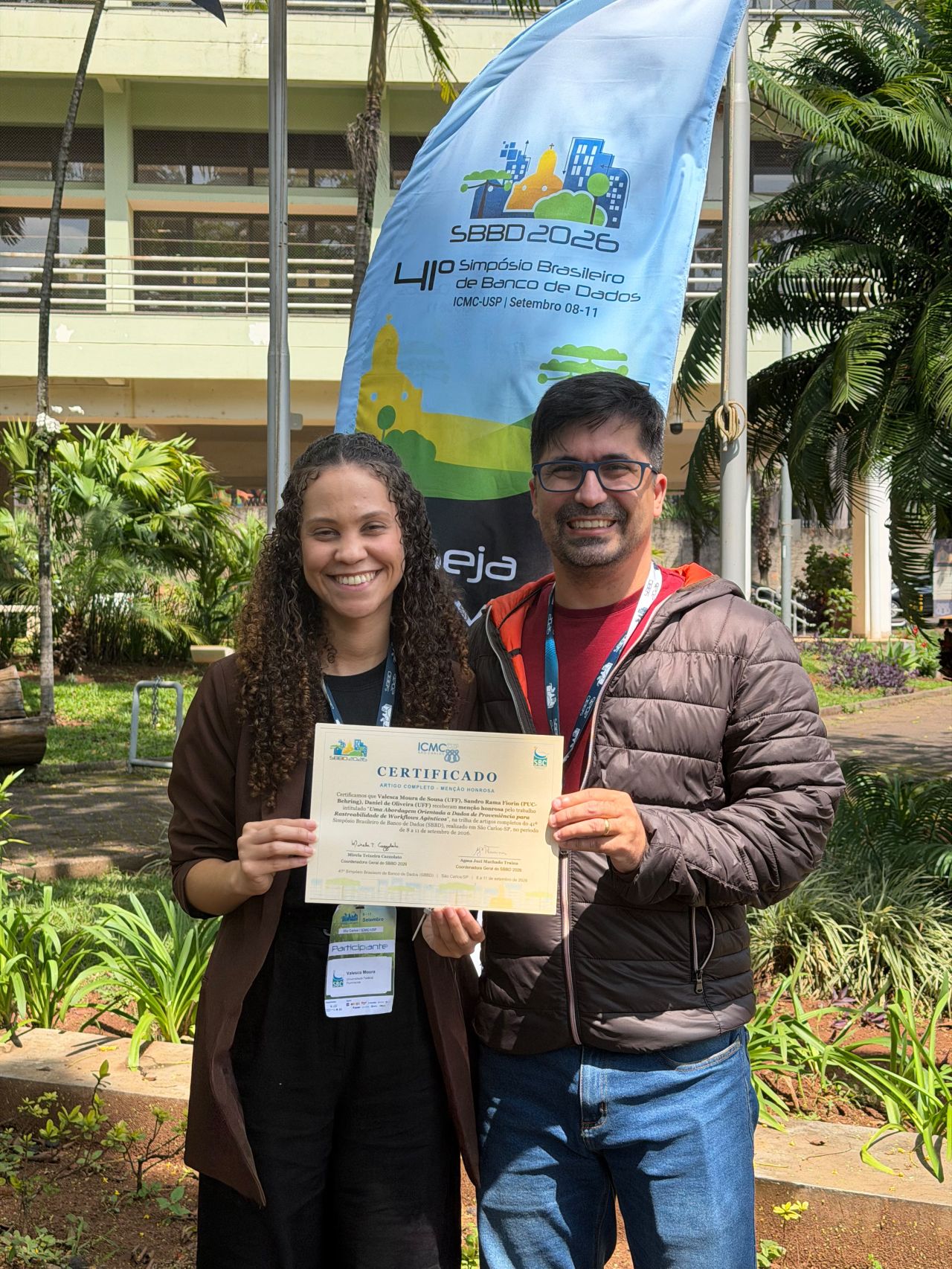
Notícia que dá orgulho de compartilhar: o artigo associado a pesquisa de mestrado da Valesca Moura (orientada pelos Profs. Sandro Rama Fiorini e Daniel de Oliveira) recebeu Menção Honrosa no SBBD 2026!
O artigo "Uma Abordagem Orientada a Dados de Proveniência para Rastreabilidade de Workflows Agênticos" aborda um problema que cresce com a adoção de agentes de IA: quando um LLM decide as tarefas e as dependências de dados de um workflow, como saber por que o workflow ficou daquele jeito?
A abordagem (ANCHOR) captura a proveniência de workflows agênticos, instrumentando o próprio framework de agentes e representando os dados conforme o padrão W3C PROV. O resultado é a possibilidade de analisar as decisões dos agentes e o impacto delas no workflow gerado, com granularidade superior à dos trabalhos existentes.
Parabéns, Valesca! 👏
📄 Artigo: https://lnkd.in/dT2ra9aC
💻 Código: https://lnkd.in/dsSVpD-U
#SBBD2026 #Proveniência #WorkflowsAgênticos #AgenticAI #IAResponsável #UFF #eScience
🇺🇸 en-us
Proud to share this one: Valesca Moura's master's research (advised by Sandro Fiorini and Daniel de Oliveira) received an Honorable Mention at SBBD 2026! 🏆
The paper "A Provenance Data-Oriented Approach for Agentic Workflow Traceability" tackles a problem that grows with every new AI agent deployment: when an LLM decides tasks and data dependencies, how do we know why a workflow ended up the way it did?
Our approach (ANCHOR) captures provenance from agentic workflows by instrumenting the agent framework itself and representing the data according to the W3C PROV standard. This makes it possible to analyze agents' decisions and their impact on the generated workflow, at a finer granularity than existing approaches offer.
Congratulations, Valesca! 👏
📄 Paper: https://lnkd.in/dT2ra9aC
💻 Code: https://lnkd.in/dsSVpD-U
#SBBD2026 #DataProvenance #AgenticWorkflows #AgenticAI #ResponsibleAI #UFF #eScience
🇧🇷 Nova publicação do UFFeScience Research Group!
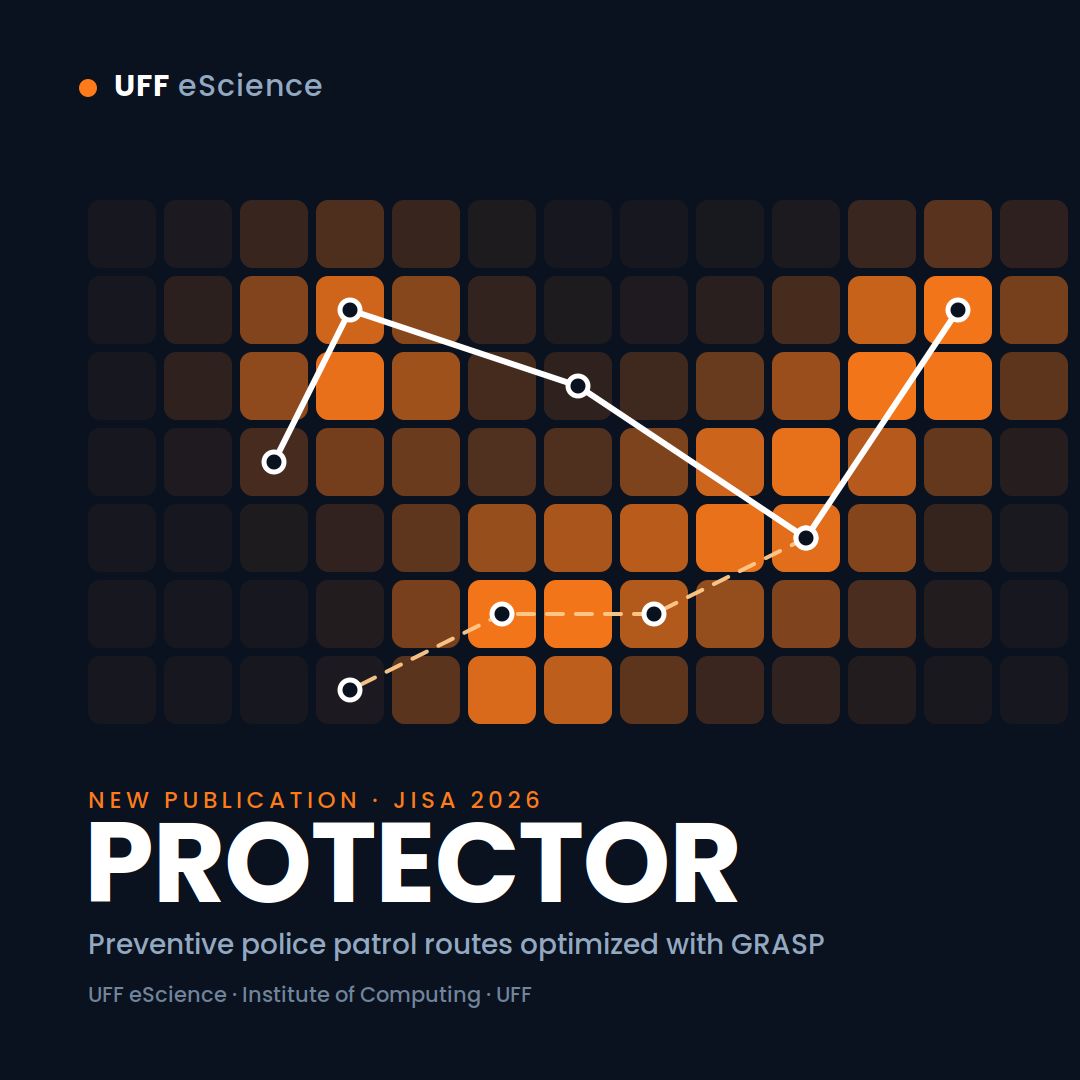
Temos o prazer de anunciar a publicação do artigo "Optimizing Preventive Police Patrol Routes in Brazilian Cities Using a GRASP-Based Routing Heuristic" no Journal of Internet Services and Applications (JISA).
O trabalho aborda o problema de Roteamento de Viaturas Policiais em Grandes Centros Urbanos (RVP-Urb), que busca maximizar a cobertura de áreas críticas de criminalidade respeitando restrições de recursos. A solução proposta, chamada PROTECTOR, é uma heurística baseada no GRASP (Greedy Randomized Adaptive Search Procedure) para gerar rotas de patrulhamento preventivo que aumentam a visibilidade policial em hotspots criminosos.
👥 Autores: Isabel Rosseti, Eduardo Canellas, Wagner Santos, Marcos Lage, Yuri Frota e Daniel de Oliveira.
Parabéns a toda a equipe!
🔗 DOI: https://lnkd.in/d2X_giC3
#UFFeScience #UFF #InstitutoDeComputação #JISA #Otimização #GRASP #Metaheurísticas #CidadesInteligentes #CiênciaDeDados #Pesquisa
🇺🇸 New publication from UFFeScience Research Group!
We're glad to announce the publication of "Optimizing Preventive Police Patrol Routes in Brazilian Cities Using a GRASP-Based Routing Heuristic" in the Journal of Internet Services and Applications (JISA).
The paper tackles the Routing of Police Vehicles in Large Urban Centers (RVP-Urb) problem, which aims at maximizing crime coverage under resource constraints. The proposed solution, PROTECTOR, is a heuristic based on the Greedy Randomized Adaptive Search Procedure (GRASP) that generates preventive patrol routes to enhance police visibility across crime hotspots.
👥 Authors: Isabel Rosseti, Eduardo Canellas, Wagner Santos, Marcos Lage, Yuri Frota, and Daniel de Oliveira.
Congratulations to the whole team!
🔗 DOI: https://lnkd.in/d2X_giC3
#UFFeScience #UFF #JISA #Optimization #GRASP #Metaheuristics #SmartCities #DataScience
🇧🇷 Mais um trabalho em cooperação com o MeLLL@UFF!
Nosso artigo "Beyond Toxicity: Evaluating Language Models for Ableism Detection in Online Social Media" foi aceito para apresentação no KDMiLe - Knowledge Discovery, Mining and Learning 2026, em Cuiabá.
O artigo investiga como LLMs identificam manifestações de capacitismo em comentários em redes sociais em português brasileiro. Avaliamos diferentes estratégias de prompting e mostramos que contexto adicional pode melhorar o desempenho dos modelos, embora ainda existam desafios importantes na distinção entre capacitismo, críticas ao capacitismo e outros tipos de discurso discriminatório.
Parabéns a Annie Amorim, Gabriel Assis, Daniele Pimenta, Débora Pina, Aline Paes e Daniel de Oliveira!
Nos vemos no KDMiLe 2026. 🎉
#LLM #AI #NLP #ResponsibleAI #Research #KDMiLe2026
🇺🇸 Another publication in cooperation with MeLLL@UFF!
Our paper, "Beyond Toxicity: Evaluating Language Models for Ableism Detection in Online Social Media", has been accepted for presentation at KDMiLe - Knowledge Discovery, Mining and Learning 2026 in Cuiabá, Brazil.
The study investigates how LLMs identify ableism in Brazilian Portuguese social media comments. We evaluated different prompting strategies and found that additional context can improve model performance, although important challenges remain in distinguishing ableism from criticism of ableism and other forms of discriminatory discourse.
Congratulations to Annie Amorim, Gabriel Assis, Daniele Pimenta, Débora Pina, Aline Paes, and Daniel de Oliveira!
See you at KDMiLe 2026! 🎉
#LLM #ArtificialIntelligence #NLP #ResponsibleAI #Research #KDMiLe2026
🎉 UFFeScience Research Group no SBBD 2026!
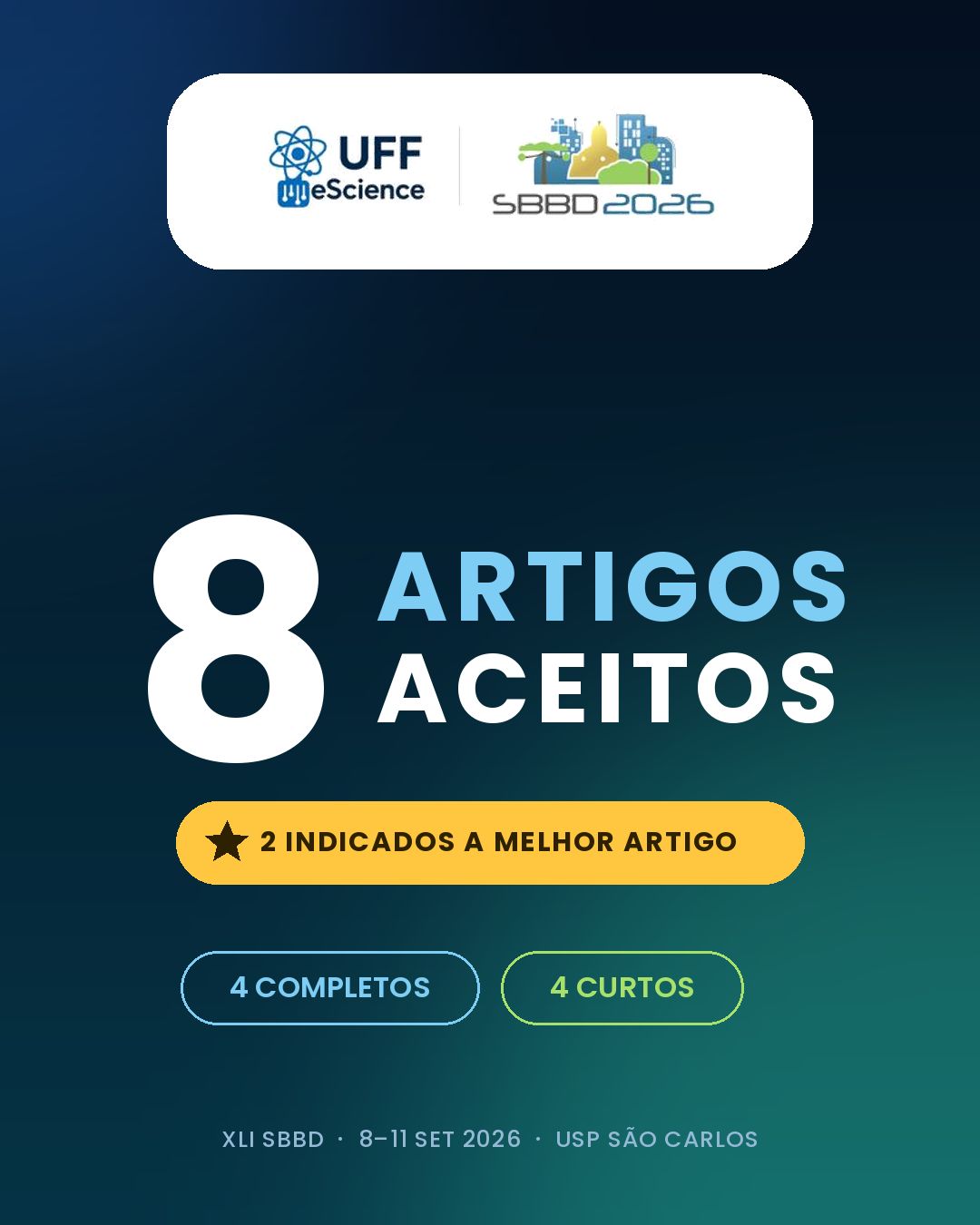
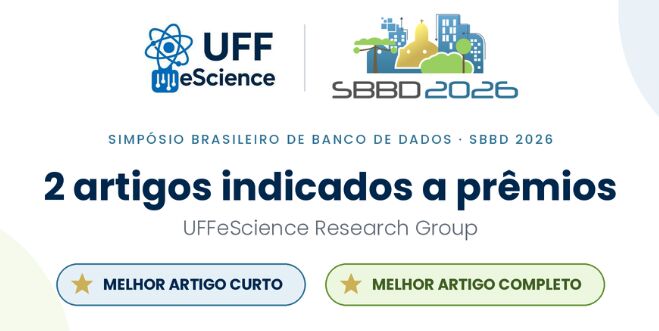
O UFFeScience Research Group (Instituto de Computação UFF) teve 8 artigos aceitos no XLI SBBD Simpósio Brasileiro de Banco de Dados: 4 completos e 4 curtos! E dois deles concorrem aos prêmios de Melhor Artigo Completo e Melhor Artigo Curto 🏆
📄 ARTIGOS COMPLETOS
Uma Abordagem Orientada a Dados de Proveniência para Rastreabilidade de Workflows Agênticos (concorre ao melhor full paper 🏆)
Valesca Moura, Sandro Rama Fiorini, Daniel de Oliveira
🔗 https://lnkd.in/dtjmPKMi
Triptych: Integrando Dados, Código e Publicações para Pesquisa Científica
Ygor Rolim, Liliane Kunstmann, Débora Pina, Carina F. Dorneles, Marcos Lage, Daniel de Oliveira
🔗 https://lnkd.in/dJ4gUtKM
Do Data Warehouse à Narrativa: Uma Arquitetura HTAP para Análise de Dados de Criminalidade
Ryan Serra, Daniel Ribeiro, Arben Hajrullah S. Tafili, Paulo S. Costa-Jr., João V. Silva-Leite, Rodrigo Salvador Monteiro, Daniel de Oliveira, Marcos Bedo
🔗 https://lnkd.in/d9SQtPu2
Definição de Acordos de Nível de Serviço Personalizados para Treinamento de Modelos via Consultas k-Skyband
Gustavo Alexandre Santos, Marcos Bedo, Yuri Frota, Daniel de Oliveira
🔗 https://lnkd.in/dYF39E-t
📄 ARTIGOS CURTOS
Understanding Storage Trade-offs for Containerized Dataflows Across the Computing Continuum (concorre ao melhor short paper 🏆)
Wesley Ferreira, Luiz Viana, Lucas Natan, Liliane Kunstmann, Daniel de Oliveira
🔗 https://lnkd.in/dFHXaWhA
On Provenance in Model Fusion
Annie Amorim, João Vitor Moraes, Débora Pina, Aline Paes, Daniel de Oliveira
🔗 https://lnkd.in/d6FDfx-i
Provenance Graph Integration in Scientific Machine Learning Multi-workflows
Débora Pina, Lucas Moreira Dias, Maria Célia Santos Lopes, Daniel de Oliveira, Marta Mattoso
🔗 https://lnkd.in/dZBvNywZ
Rumo a Duas Décadas de Publicações em Banco de Dados: Uma Análise dos Artigos do JIDM
Elena Costa Blanco, Josué Santos, Maristela Holanda, Vanessa Braganholo, Marcos Bedo, Daniel de Oliveira
🔗 https://lnkd.in/dJdxheEz
Um obrigado especial aos nossos alunos, da iniciação científica ao doutorado: a dedicação de vocês, nas madrugadas de experimento e nas revisões, está em cada página desses artigos. Vocês são o motor deste grupo 💙
Parabéns a todas e todos! Nos vemos em São Carlos!
#SBBD2026 #UFF #eScience #BancoDeDados
🇧🇷 (pt-br) 🎉 Ótimas notícias para começar o fim de semana!
É com muita alegria que compartilhamos que dois trabalhos com participação do UFFeScience Research Group foram indicados a prêmios no Brazilian Symposium on Databases (SBBD) 2026, principal evento da comunidade de bancos de dados no Brasil.
🏅 Indicação a Melhor Artigo Curto
"Understanding Storage Trade-offs for Containerized Dataflows Across the Computing Continuum". Autores: Wesley Ferreira (IC/UFF), Luiz Viana (IC/UFF), Lucas Natan (IC/UFF), Liliane Kunstmann (UFRRJ) e Daniel de Oliveira (IC/UFF).
🏅 Indicação a Melhor Artigo Completo (Best Full Paper)
"Uma Abordagem Orientada a Dados de Proveniência para Rastreabilidade de Workflows Agênticos". Autores: Valesca Moura (IC/UFF), Sandro Rama Fiorini (Instituto PUC-Behring de Inteligência Artificial) e Daniel de Oliveira (IC/UFF).
Parabéns a todos os autores e autoras! Indicações como essas são resultado de meses de dedicação, muitas iterações e de um trabalho verdadeiramente coletivo.
Nos vemos no SBBD!
🇺🇸 (en-us) 🎉 Great news to kick off the weekend!
We're delighted to share that two papers co-authored by the UFFeScience Research Group have been nominated for awards at the Brazilian Symposium on Databases (SBBD) 2026, the leading venue of the Brazilian database community.
🏅 Best Short Paper Nomination
"Understanding Storage Trade-offs for Containerized Dataflows Across the Computing Continuum". Authors: Wesley Ferreira (IC/UFF), Luiz Viana (IC/UFF), Lucas Natan (IC/UFF), Liliane Kunstmann (UFRRJ), and Daniel de Oliveira (IC/UFF).
🏅 Best Full Paper Nomination
"A Provenance-Driven Approach for the Traceability of Agentic Workflows". Authors: Valesca Moura (IC/UFF), Sandro Rama Fiorini (Instituto PUC-Behring de Inteligência Artificial), and Daniel de Oliveira (IC/UFF).
Congratulations to all the authors! Nominations like these are the result of months of dedication, many iterations, and a truly collective effort.
See you at SBBD!
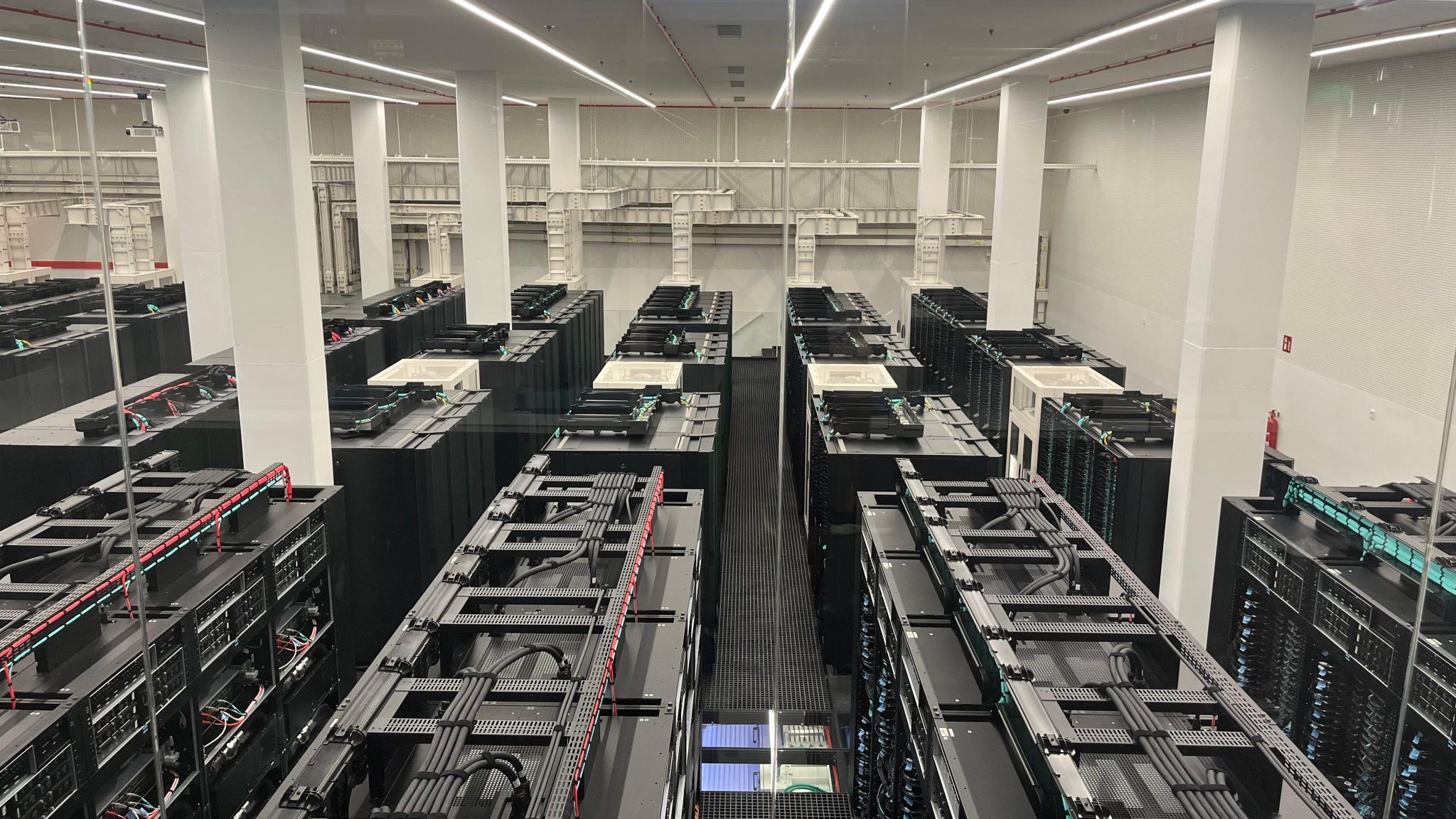
In June, we had the opportunity to visit the Barcelona Supercomputing Center (BSC), where we were warmly hosted by Dr. Débora Pina.
The visit provided an excellent opportunity to learn more about the BSC and to visit MareNostrum 5, a pre-exascale EuroHPC supercomputer hosted at BSC, as well as the Quantum computer.
We sincerely thank Dr. Debora Pina for her warm hospitality.
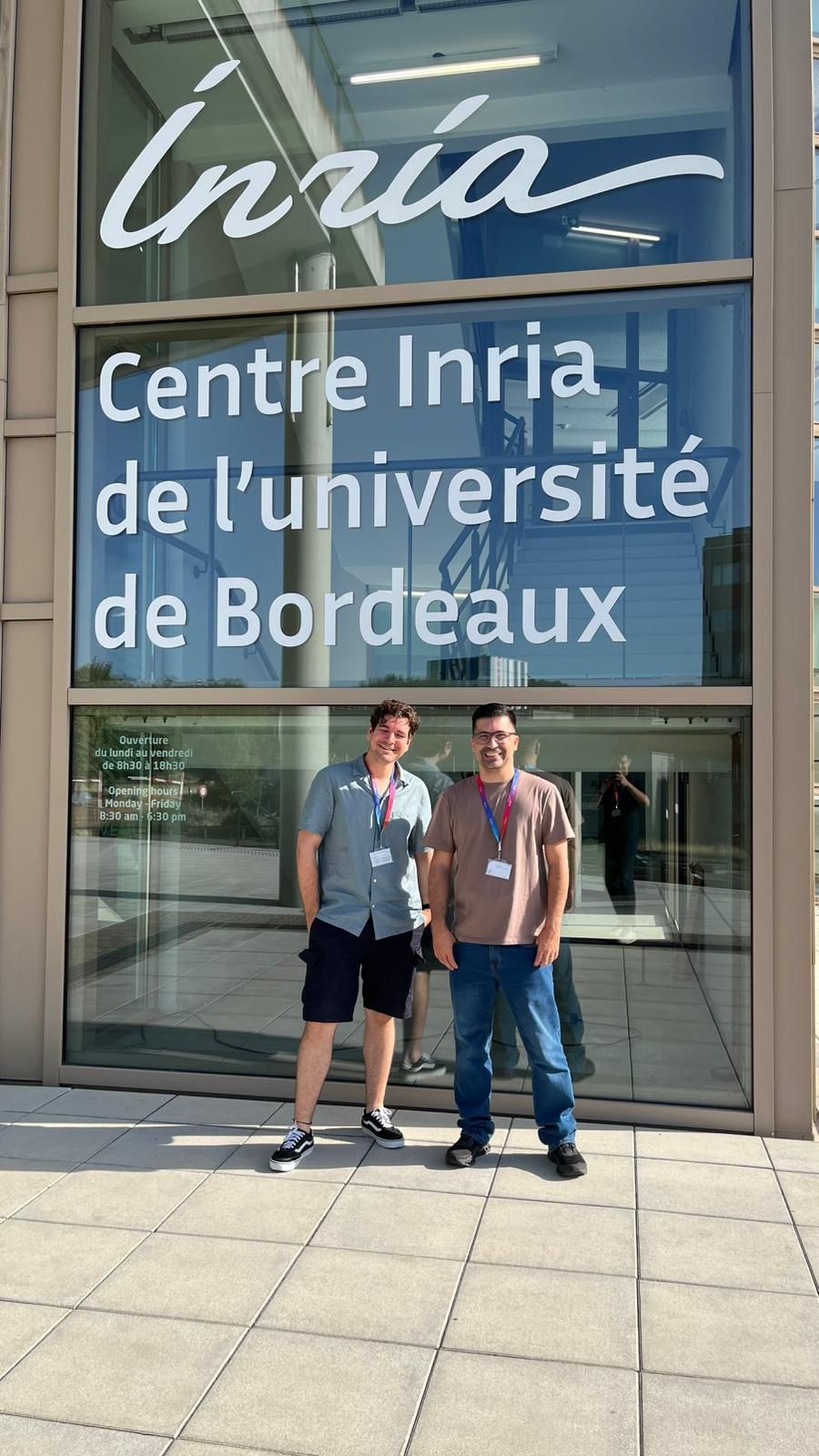
As part of our internationalization initiatives and the activities of the DECoHPC Équipe Associée, members of the UFFeScience Research Group had the opportunity to visit INRIA Bordeaux and meet with Dr. Luan Teylo, a researcher from the TADaaM Group.
During the visit, Prof. Daniel de Oliveira and Wesley Ferreira, a Master's student at Universidade Federal Fluminense (UFF), discussed ongoing research on containerized workflow scheduling, particularly in the context of Wesley's Master's dissertation.
The meeting provided an excellent opportunity to exchange ideas, strengthen collaborations, and explore new research directions in scientific workflows across the computing continuum.
The visit also included two research presentations:
🔹 Prof. Daniel de Oliveira presented:
"Federated Outlier Detection for LSST-Scale Astronomical Data in Clouds"
The presentation discussed the challenges of applying Federated Learning to outlier detection in large-scale astronomical surveys, investigating performance, scalability, and cost trade-offs in distributed cloud environments.
🔹 Wesley Ferreira presented:
"AkôFlow: A Container-based and Provenance-Aware Workflow Engine for Portable Execution Across the Computing Continuum"
The talk introduced AkôFlow, an open-source workflow engine designed to support portable, provenance-aware, and resource-efficient execution of containerized workflows across heterogeneous environments, including HPC systems, clusters, and cloud infrastructures.
We thank the TADaaM Group and INRIA Bordeaux for the warm welcome and stimulating discussions. Initiatives such as this reinforce the importance of international scientific cooperation in advancing research and fostering innovation.
#UFFeScience #Internationalization #ResearchCollaboration #ScientificWorkflows #HPC #FederatedLearning #INRIA #TADaaM #DECoHPC
🚀 New Paper Accepted at SBBD 2026! 🚀
We are happy to share that our latest research paper, "Provenance-Guided Analysis of Agentic Workflows" (Análise de Workflows Agênticos Guiada por Proveniência -- In Portuguese), has been accepted for presentation at the Brazilian Symposium on Databases (SBBD 2026)! 🇧🇷✨
This work is a core part of Valesca Moura's M.Sc. dissertation at Instituto de Computação UFF under the supervision of Prof. Daniel de Oliveira (UFF) and Sandro Rama Fiorini (PUC-Behring Institute for Artificial Intelligence)
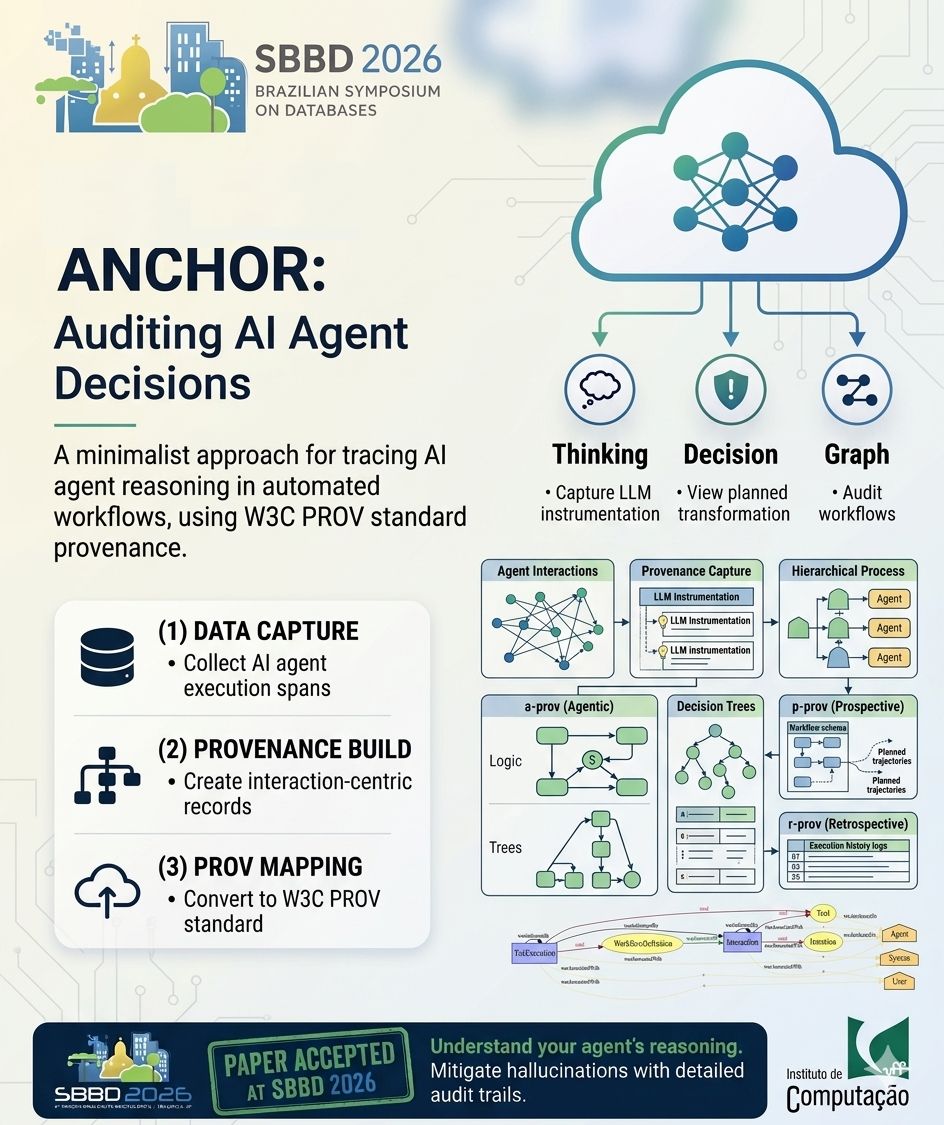
As Autonomous AI Agents and Large Language Models (LLMs) increasingly drive complex decision-making and automate workflows, a critical challenge emerges: How do we audit their choices and mitigate hallucinations when their reasoning remains hidden?
The proposed approach, ANCHOR (ANalysis of agentiC workflows via History and prOvenance), introduces a framework to solve this:
🎛️ Telemetry & Interaction-Centric Capture: Tracing execution spans down to individual agent intentions and actions.
📐 Data Structuring: Transforming unstructured logs into clear, hierarchical agent records (Interactions, Entities, Intentions).
🌐 W3C PROV Alignment: Standardizing data to export rich, graph-based provenance models for thorough workflow auditing.
Feel free to reach out at SBBD 2026 if you'd like to discuss agentic frameworks, data provenance, or AI auditability!
#SBBD2026 #AIAgents #LLMs #DataProvenance #DataEngineering #ResponsibleAI #UFF #Research #MScDissertation
🎉 Paper Accepted at SBBD 2026! 🎉
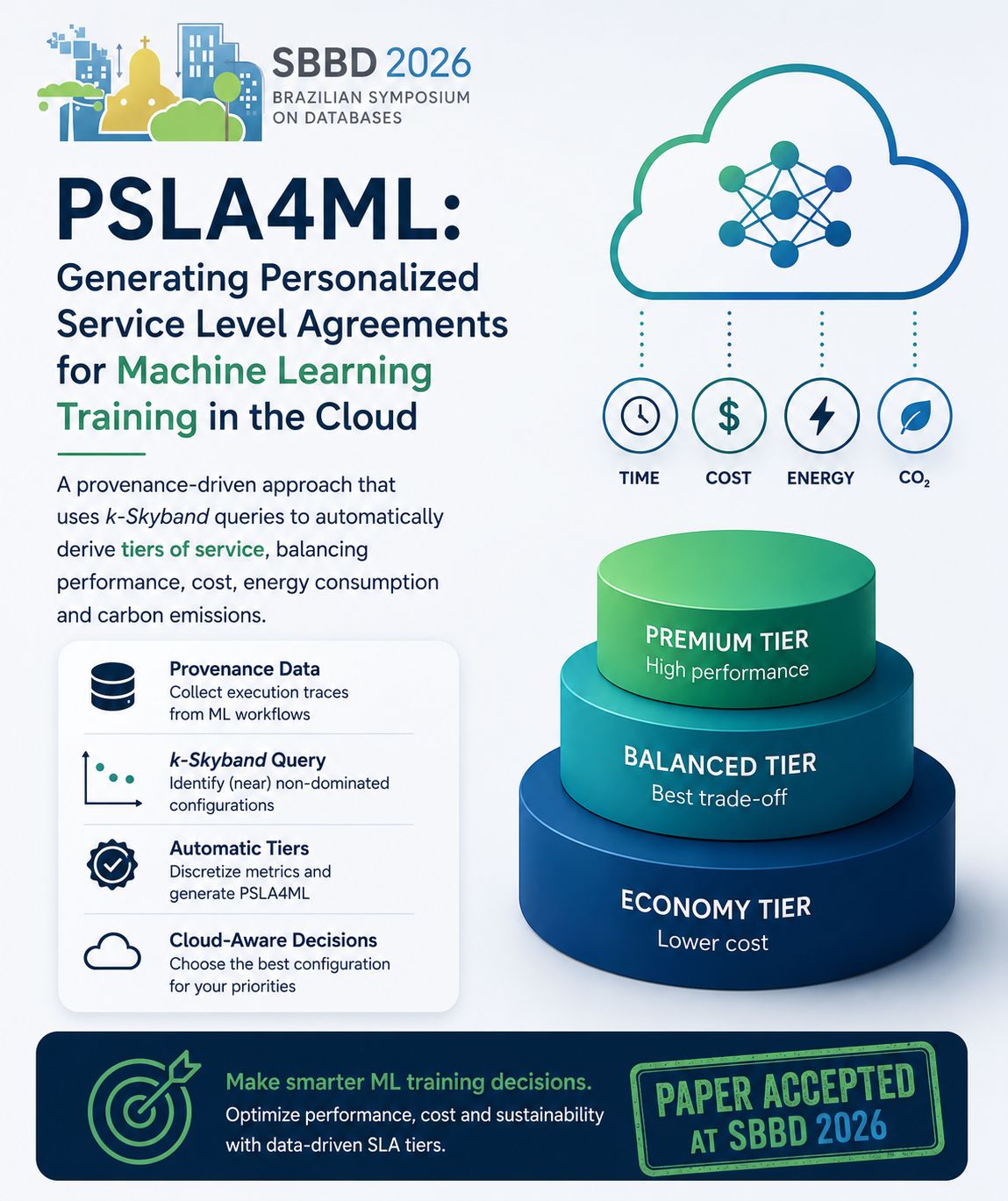
We are happy to share that our paper, "Personalized Service Level Agreements for Machine Learning Training using k-Skyband Queries", has been accepted at SBBD 2026 (Brazilian Symposium on Databases).
Training Machine Learning models in cloud environments involves important trade-offs between execution time, financial cost, energy consumption, and carbon emissions. Choosing the right infrastructure and resource configuration is often challenging, especially for large-scale ML workloads.
In this paper, we introduce an approach that extends the concept of Personalized Service Level Agreements (PSLAs) to Machine Learning training workflows.
By using provenance data and k-Skyband queries, our method automatically identifies resource configurations that represent different trade-offs between performance, cost, and sustainability, helping users make more informed decisions before launching training jobs.
This research was conducted as part of Gustavo Alexandre PhD at the Federal Fluminense University (UFF), within the UFFeScience Research Group. Gustavo is advised by Prof. Daniel de Oliveira and Prof. Yuri Frota. We also thank Prof. Marcos Bedo for his valuable collaboration and contributions to the paper.
Looking forward to presenting our results at SBBD 2026 and discussing future directions for sustainable and data-driven Machine Learning infrastructure management.
#SBBD2026 #MachineLearning #CloudComputing #Databases #eScience #Provenance #Sustainability #ArtificialIntelligence #Research #PhD
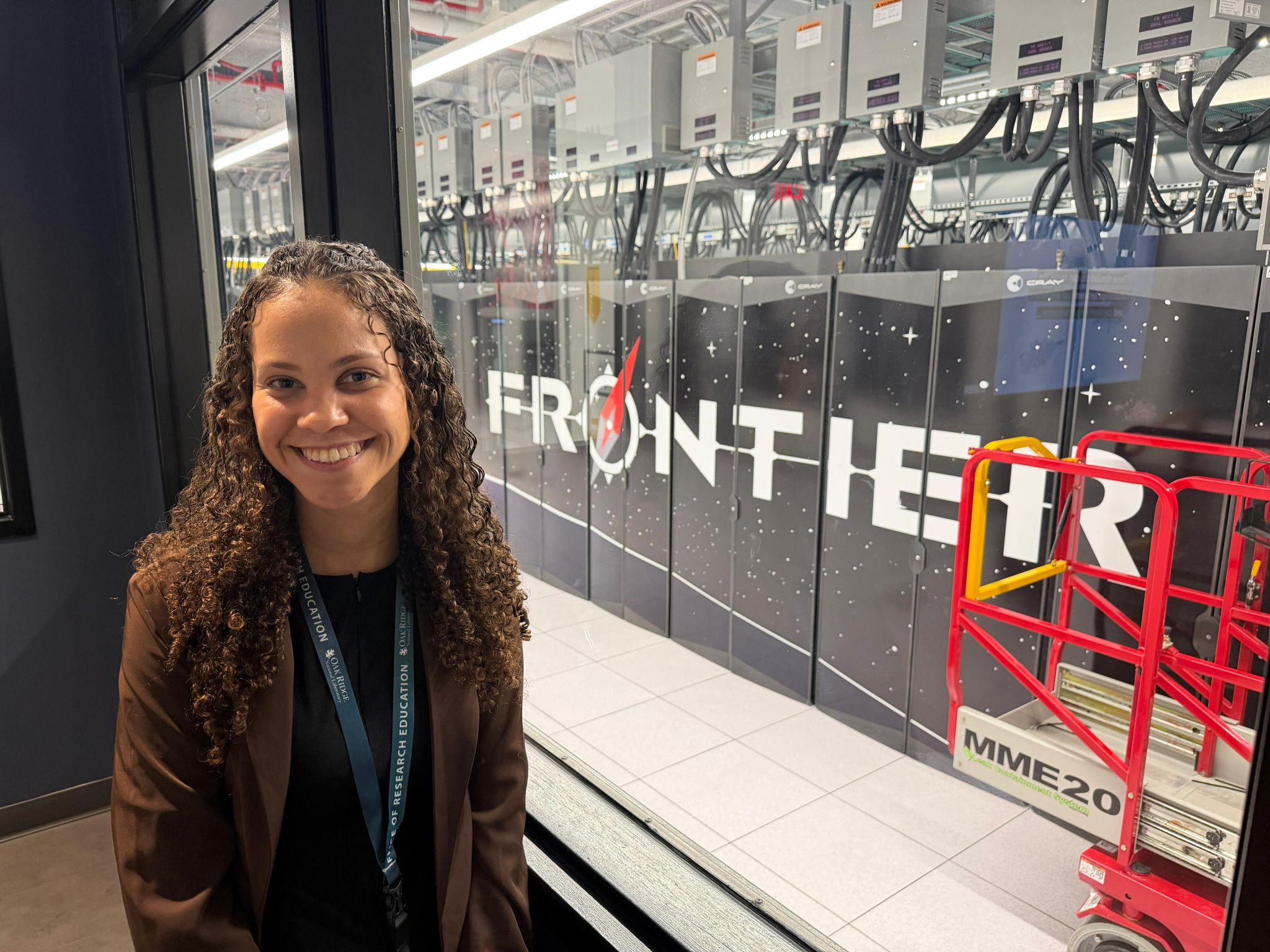
We are excited to share that Valesca Moura, a Master's student at the Institute of Computing@UFF (Instituto de Computação UFF) and a member of UFFeScience Research Group, has started an internship at the Oak Ridge National Laboratory (ORNL)!
During her internship, Valesca will work on the topic of her Master's dissertation, "Provenance Management for Agentic Workflows", collaborating closely with the ORNL research team to advance this important area of study.
Her work will be supervised by Renan Souza, strengthening the collaboration between IC/UFF, UFFeScience, and ORNL.
This internship offers an excellent opportunity for international research collaboration and contributes to advancing research on agentic systems and provenance management.
Congratulations, Valesca, on this achievement! We wish you a successful and rewarding experience at ORNL. 🎉
#UFF #UFFeScience #ORNL #Research #Internship #AgenticAI #ProvenanceManagement #ScientificCollaboration
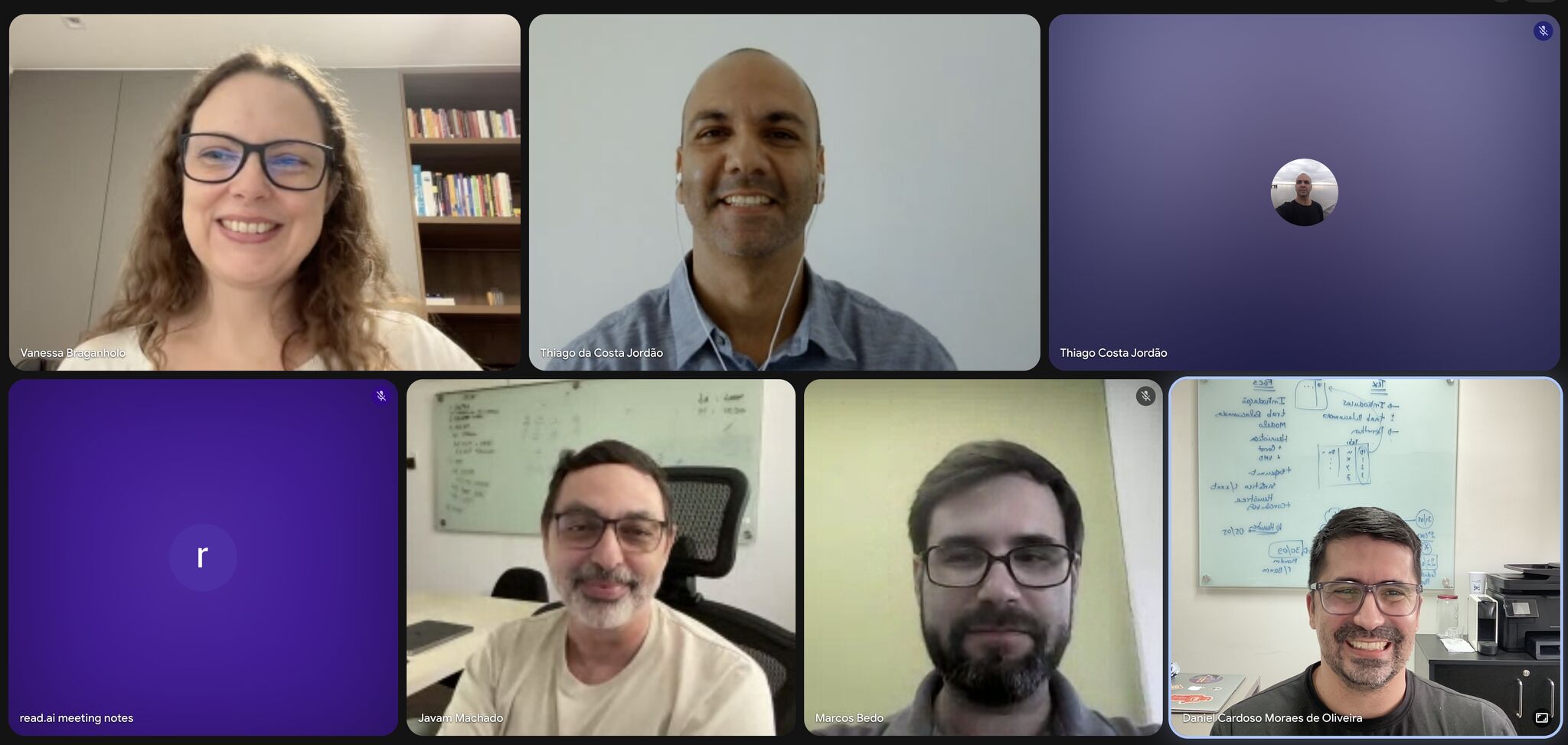
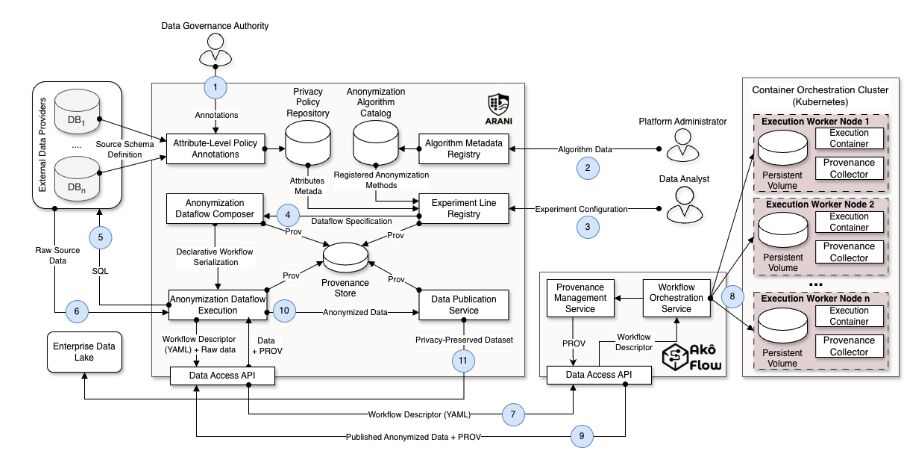
🇧🇷 Como grupo de pesquisa, temos grande satisfação ao compartilhar a defesa de mestrado de nosso integrante, Thiago Jordão, membro do UFFeScience Research Group. Seu trabalho, intitulado "ARANI: Uma Abordagem Baseada em Linha de Experimento para Preservação de Privacidade e Auditoria em Data Lakes", reforça o compromisso do grupo com pesquisas relevantes e de impacto na área de dados.
A banca examinadora foi composta pelos professores Javam Machado (UFC) e Vanessa Braganholo (IC/UFF). O trabalho foi orientado pelos professores Daniel de Oliveira e Marcos Bedo.
Parabéns, Thiago, por essa importante conquista! 👏🚀 Temos orgulho de contar com você no UFFeScience Research Group e desejamos muito sucesso nos próximos passos da sua trajetória.
🇺🇸 As a research group, we are proud to share the Master's defense of our member Thiago Jordão, part of UFFeScience Research Group. His work, entitled "ARANI: An Experiment Line-Based Approach for Privacy Preservation and Auditing in Data Lakes", highlights our group’s commitment to impactful research in the data domain.
The examination committee was composed of Professors Javam Machado (UFC) and Vanessa Braganholo (IC/UFF). The work was supervised by Professors Daniel de Oliveira and Marcos Bedo.
Congratulations, Thiago, on this important achievement! 👏🚀 We are proud to have you at UFFeScience Research Group and wish you continued success in your journey.
🚀 E se fosse possível executar workflows científicos em qualquer ambiente, sem dor de cabeça com a compatibilidade e a portabilidade?
Apresentamos o AkôFlow: um novo jeito de gerenciar workflows científicos em qualquer plataforma.
Temos o prazer de compartilhar um projeto em desenvolvimento que já demonstra grande potencial de impacto nas áreas de computação científica e de engenharia de dados.
🎓 O trabalho faz parte da dissertação do Wesley Ferreira, sob orientação do Prof. Daniel de Oliveira e de colaboradores: Profa. Aline Paes, Prof. Marcos Bedo, Profa. Liliane Kunstmann, Prof. Yuri Frota, Luan Teylo, Raphael Reis Garcia e Rodrigo A. P. da Silva.
O AkôFlow nasce para resolver um desafio bem conhecido por quem trabalha com workflows complexos:
👉 Como executar workflows em diferentes ambientes (clusters, nuvem, HPC) sem sofrer com incompatibilidades e dependências?
💡 Nossa proposta combina conteinerização + escalonamento para entregar:
✔️ Portabilidade entre ambientes heterogêneos de forma transparente
✔️ Execução compatível com Docker, Kubernetes e Singularity
✔️ Reutilização de workflows existentes
✔️ Monitoramento completo com dados de proveniência
Na prática, o mesmo workflow pode ser executado em diferentes infraestruturas: sem retrabalho!
📌 Mais do que rodar tarefas, estamos falando de garantir reprodutibilidade, eficiência e escalabilidade em experimentos científicos.
Assista às apresentações do AkôFlow:
🎥 https://lnkd.in/d9vrNzqS
🎥https://lnkd.in/dj_p6ixt
Os artigos associados ao AkôFlow podem ser obtidos em:
📚 https://lnkd.in/deUJ_XiF
📚 https://lnkd.in/d2XHUtdc
📚 https://lnkd.in/dptpQa7t
Mais informações em: https://akoflow.com/
Esse é só o começo! Seguimos evoluindo o AkôFlow com novas funcionalidades, integrações e contribuições open source.
Fica o convite: vamos repensar juntos como construímos e executamos workflows?
#Akoflow #computacaocientifica #cienciadedados #opensource #kubernetes #docker #pesquisa #inovacao
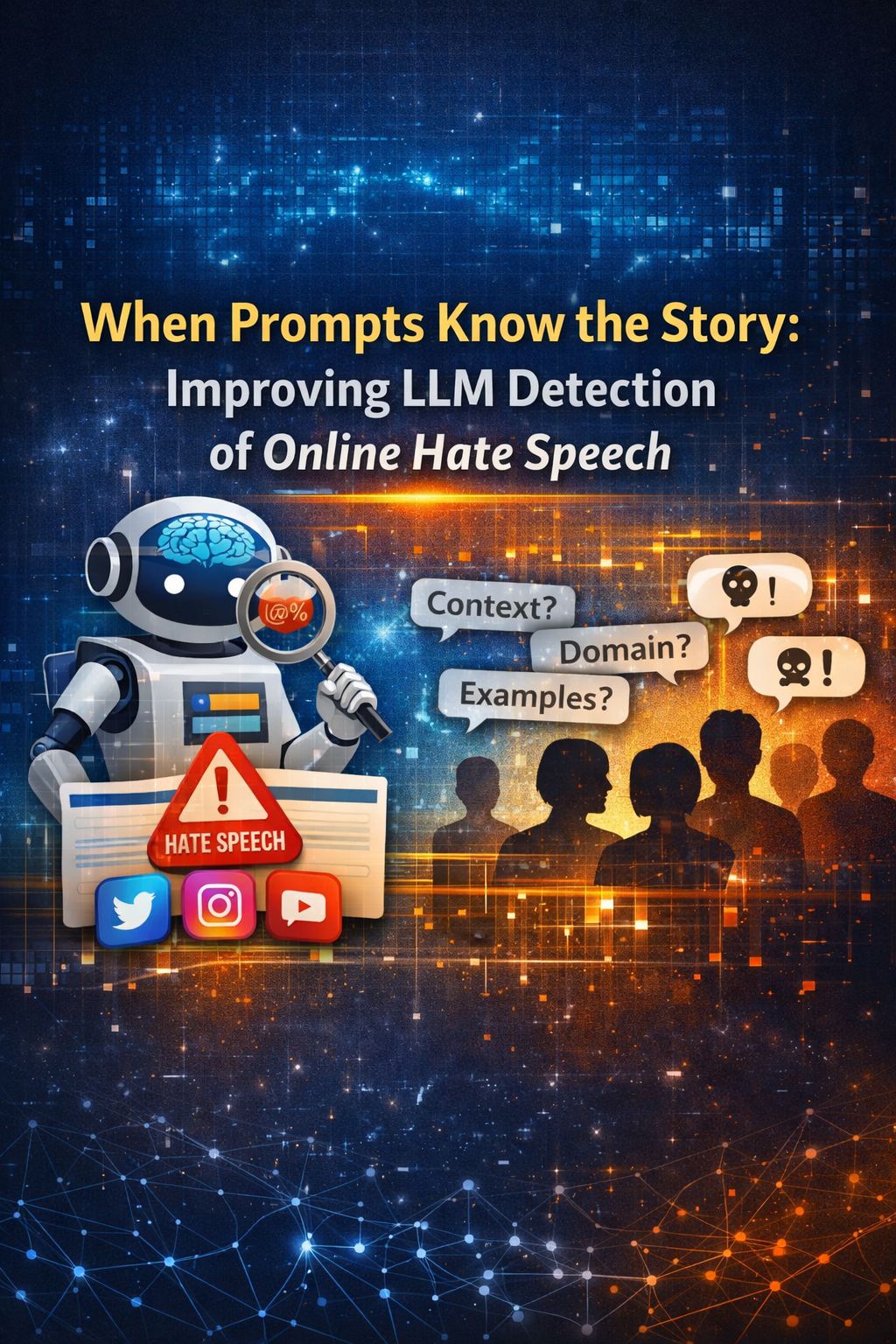
We are happy to share that our paper, “When Prompts Know the Story: Improving LLM Detection of Online Hate Speech,” has been accepted for publication in the Journal of Information and Data Management (JIDM) and will be published soon.
This work is the result of Laryssa Paiva's undergraduate thesis (TCC), and it is great to see this research reach the community through a journal publication.
We would like to thank all the co-authors (Laryssa Paiva, Annie Amorim, Gabriel Assis, Luiz Gustavo Dias, Aline Paes, and Daniel de Oliveira) for their collaboration and contributions throughout this work.
Research is always a collective effort, and this result reflects the dedication of everyone involved.
This paper is also the outcome of a collaboration between UFFeScience Research Group and MeLLL@UFF!
Looking forward to sharing the final version once it is officially published! 🚀
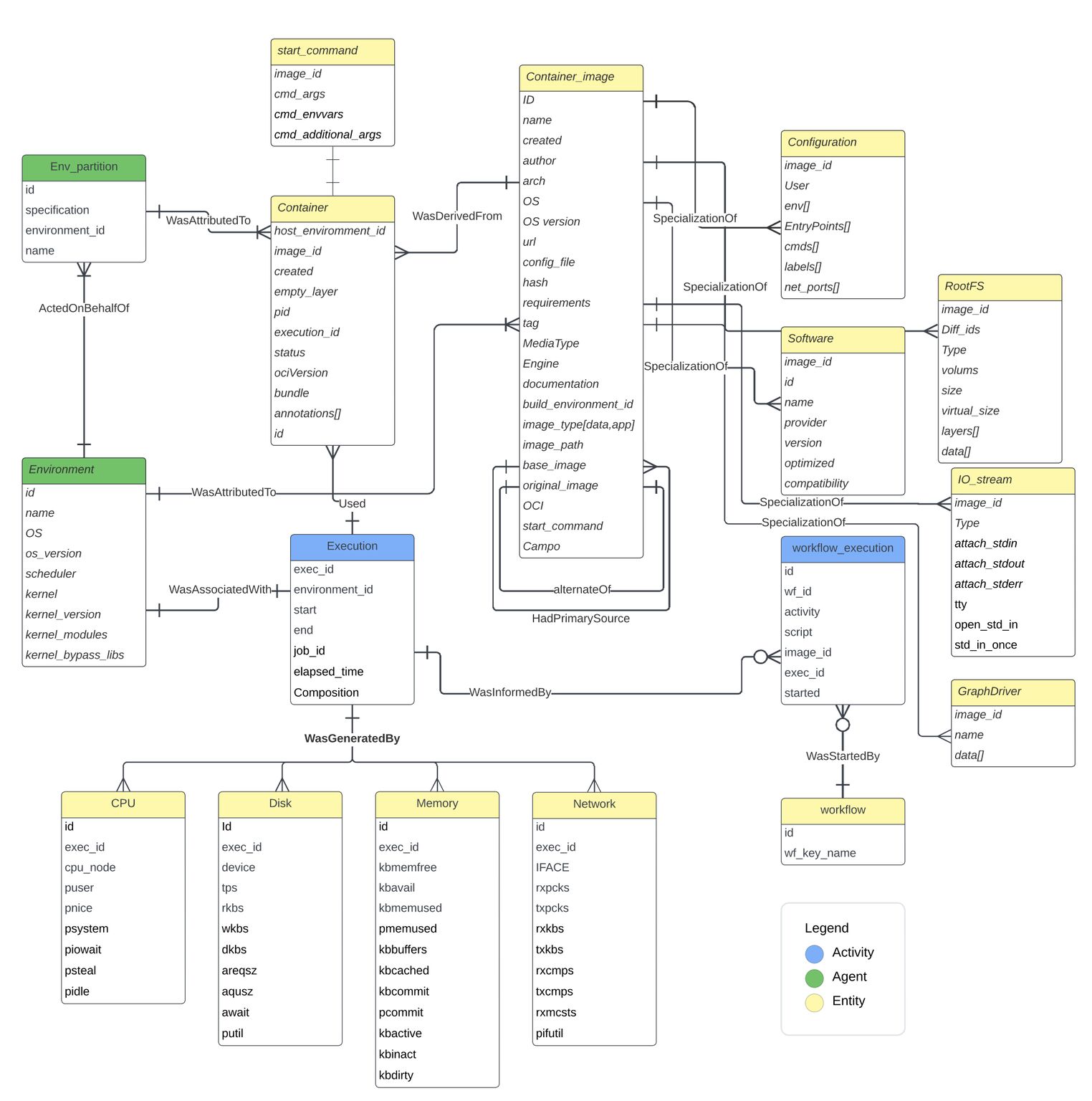
We are happy to share that our paper “Provenance Support for Containerized Workflow Analyses in High-Performance Computing Environments” has been published in the Journal of Information and Data Management (JIDM)! 🎉
This work is the result of Liliane Kunstmann’s PhD thesis and an extended version of our Best Paper from the Brazilian Symposium on Databases 2024.
In this paper, we address key challenges in deploying scientific workflows in HPC environments by proposing a container-aware provenance approach.
Our model connects workflow execution with container metadata, improving traceability, reproducibility, and analysis across heterogeneous infrastructures.
We also present ProvDeploy, a framework that enables deeper insights into containerized workflow executions, supporting reproducibility and better decision-making in complex scientific experiments.
🔗 Read the full paper: https://lnkd.in/dK2SbVSM
Huge thanks to all co-authors (Liliane Kunstmann, Débora Pina, Daniel de Oliveira, Marta Mattoso)!
#HPC #ScientificWorkflows #Provenance #Reproducibility #Containers #DataManagement
I’m happy to share that our paper “An Elastic and Auditable Privacy-as-a-Service Approach for Data Lakes” has been accepted at ICEIS 2026! 🎉
In this work, we introduce ARANI, a platform designed to address key challenges in privacy-preserving data publishing for Data Lakes, with a focus on scalability, flexibility, and auditability.
I would like to give a special congratulations to Thiago Jordão and Wesley Ferreira for their excellent work 👏
In particular, this achievement is especially meaningful for Thiago, as ARANI is part of his Master’s dissertation and represents an important milestone in his research journey.
Proud to see this work gaining recognition, and looking forward to presenting it at the conference!
#DataPrivacy #DataLakes #Research #ICEIS2026
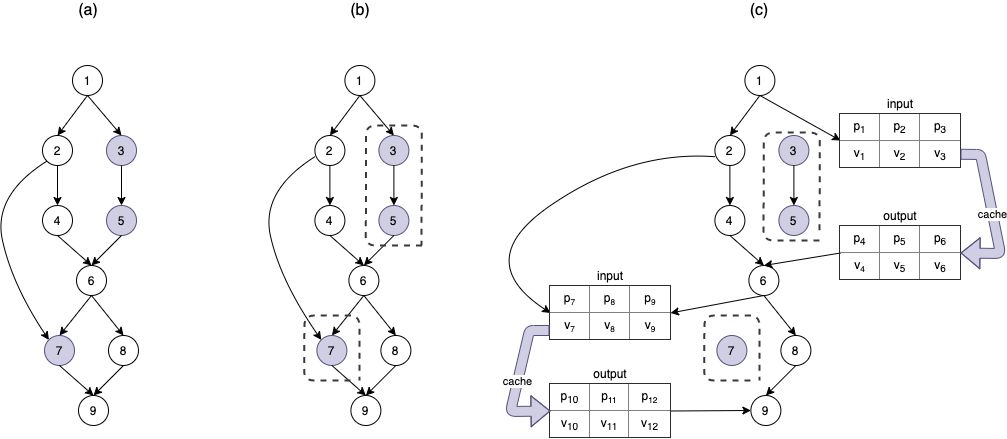
🔬 Do we really need to recompute everything?
In many scenarios, the same workflows are executed repeatedly with only small changes in parameters or datasets. Yet, many systems still recompute everything from scratch. This characteristic motivated a question that led to our recent research.
We are happy to share that our paper “Have We Seen these Data Before? A GRASP-based Execution Strategy for Cloud-based Workflows with Memoization” has been accepted for publication in Concurrency and Computation: Practice and Experience 🎉
💡 Key idea:
Instead of recomputing intermediate results, why not reuse previously computed results?
In this paper, we propose MemoirGRASP, a workflow execution strategy based on the GRASP metaheuristic that uses memoization to detect and reuse previously computed intermediate data across workflow executions.
📊 What we found:
Experiments with synthetic workflows and real-world applications such as Montage and Phenomenal show that reusing intermediate results can significantly reduce redundant computation and improve execution efficiency in multisite cloud environments.
🤝 This work is the result of an international collaboration between researchers from Instituto de Computação UFF (Brazil), University of Göttingen (Germany), Inria / University of Montpellier, CNRS (France).
Grateful to all co-authors (Rodrigo A. P. da Silva, Gaetan Heidsieck, Esther Pacitti, Patrick Valduriez, Yuri Frota, and Daniel de Oliveira) for this collaboration!
#ScientificWorkflows #CloudComputing #DistributedSystems #HighPerformanceComputing #Research
🇧🇷 (pt-br)
Chegamos a 1.000 inscritos no LinkedIn!
O UFFeScience Research Group agradece a todos os que acompanham, apoiam e acreditam na divulgação científica, na inovação e na pesquisa.
Seguimos juntos compartilhando conhecimento e fazendo ciência.
Obrigado por fazer parte dessa jornada!
🇺🇸 (en-us)
We’ve reached 1,000 subscribers on LinkedIn!
The UFFeScience Research Group thanks everyone who follows, supports, and believes in science communication, innovation, and research.
Let’s keep moving forward together, sharing knowledge and building science.
Thank you for being part of this journey!
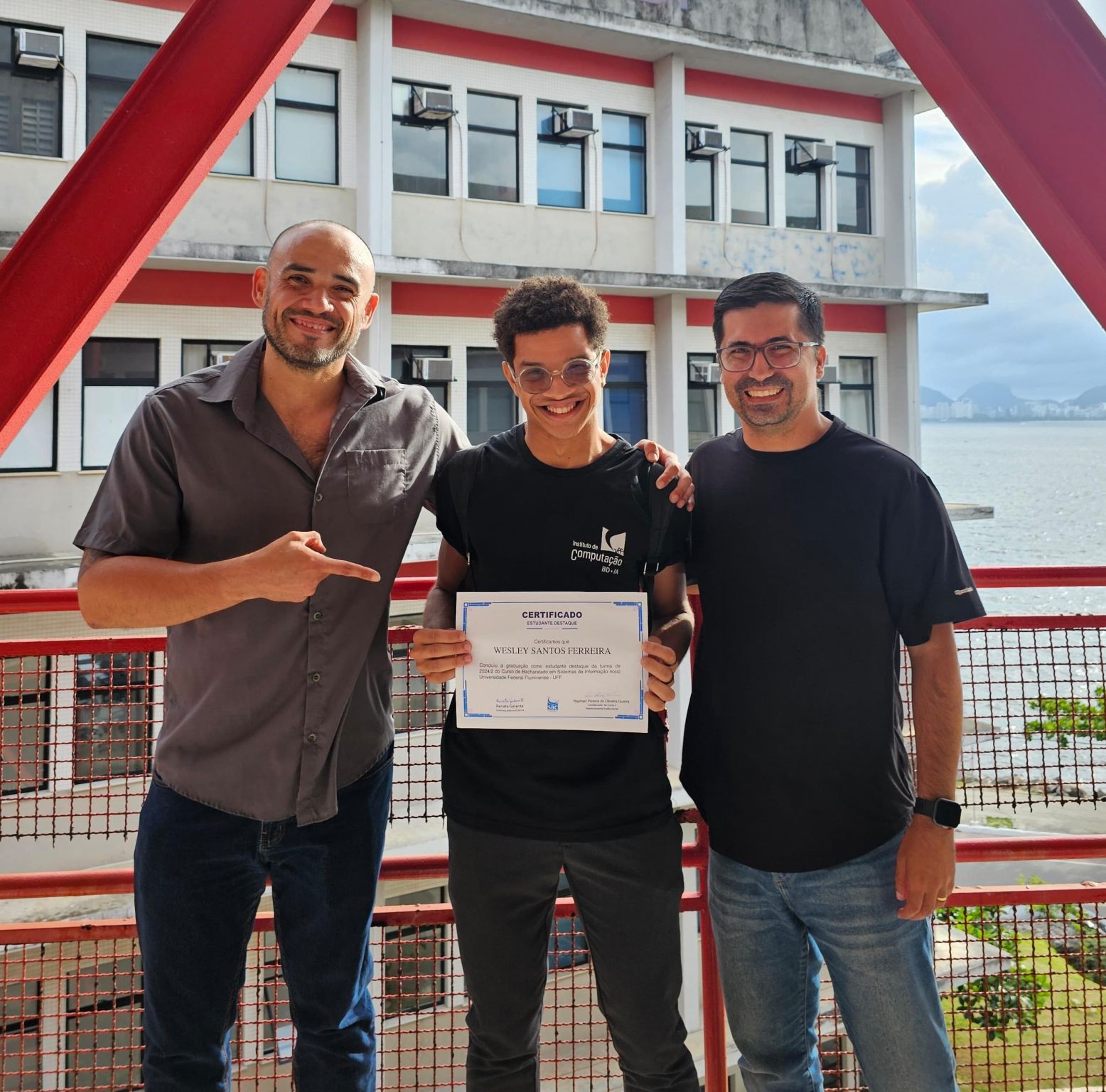
[pt-br] 🇧🇷 Parabéns Wesley Ferreira pelo prêmio Estudante Destaque da Sociedade Brasileira de Computação - SBC!
[en-us] 🇺🇸 Congratulations to Wesley Ferreira for winning the Outstanding Student award from the Brazilian Computer Society (SBC)!
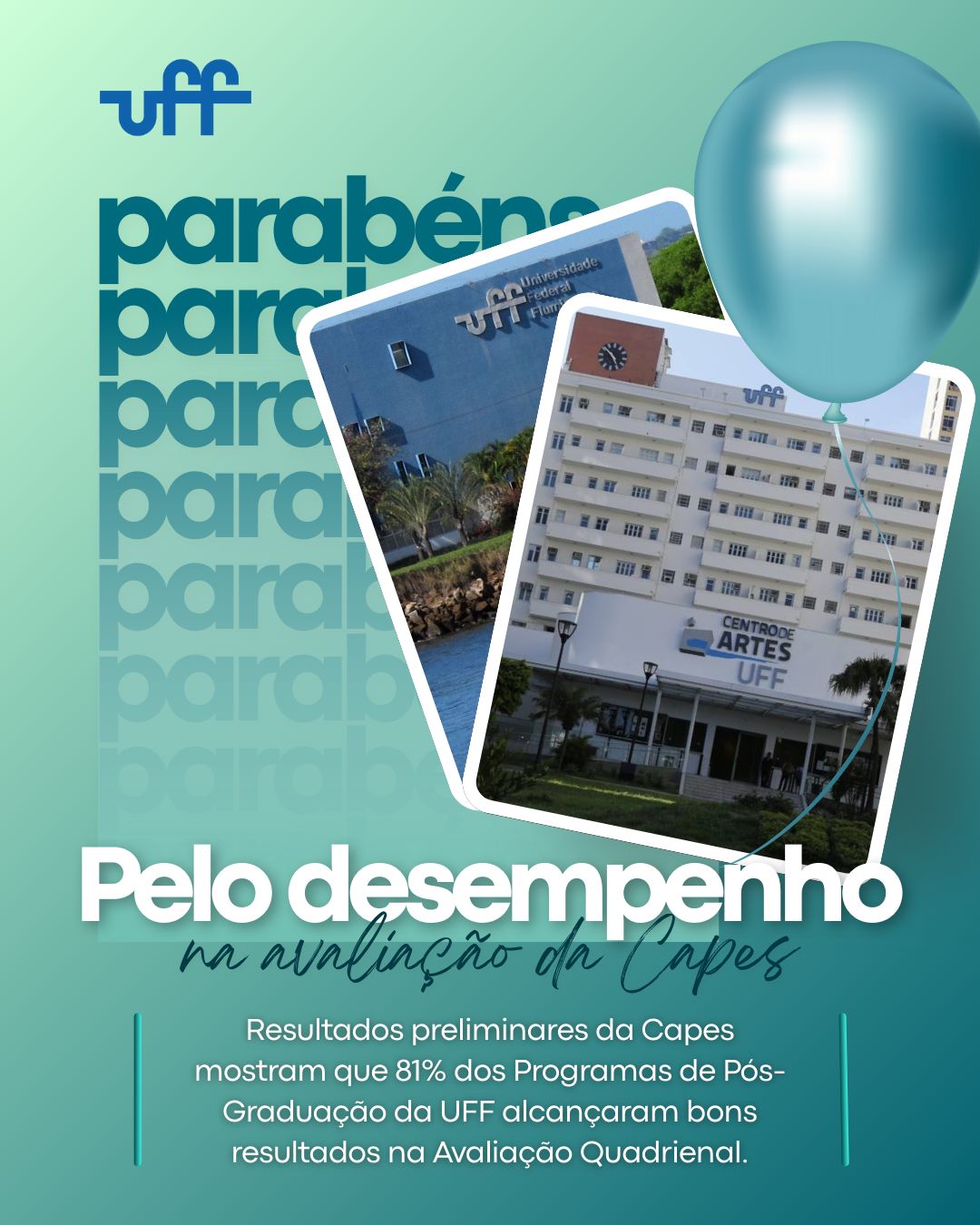
🎓 UFF consolida excelência na Pós-Graduação!
A Universidade Federal Fluminense inicia o ano letivo de 2026 com ótimas notícias 📚✨
Dados preliminares da avaliação da Capes mostram que 81% dos Programas de Pós-Graduação da UFF alcançaram notas de bom desempenho e excelência, refletindo qualidade acadêmica e reconhecimento em padrões internacionais 🌍📊
📌 Atualmente, a UFF conta com:
⭐ 6 programas nota 7
⭐ 9 programas nota 6
⭐ 17 programas nota 5
Outro destaque importante é o fortalecimento da pesquisa 🔬🚀: mais de 50% dos cursos que tinham nota 3 avançaram para a nota 4, resultado direto das políticas de qualificação institucional.
Seguimos crescendo, consolidando a excelência e fortalecendo a ciência pública 💙🤍
Para mais informações, acesse: https://bit.ly/4jENvrd
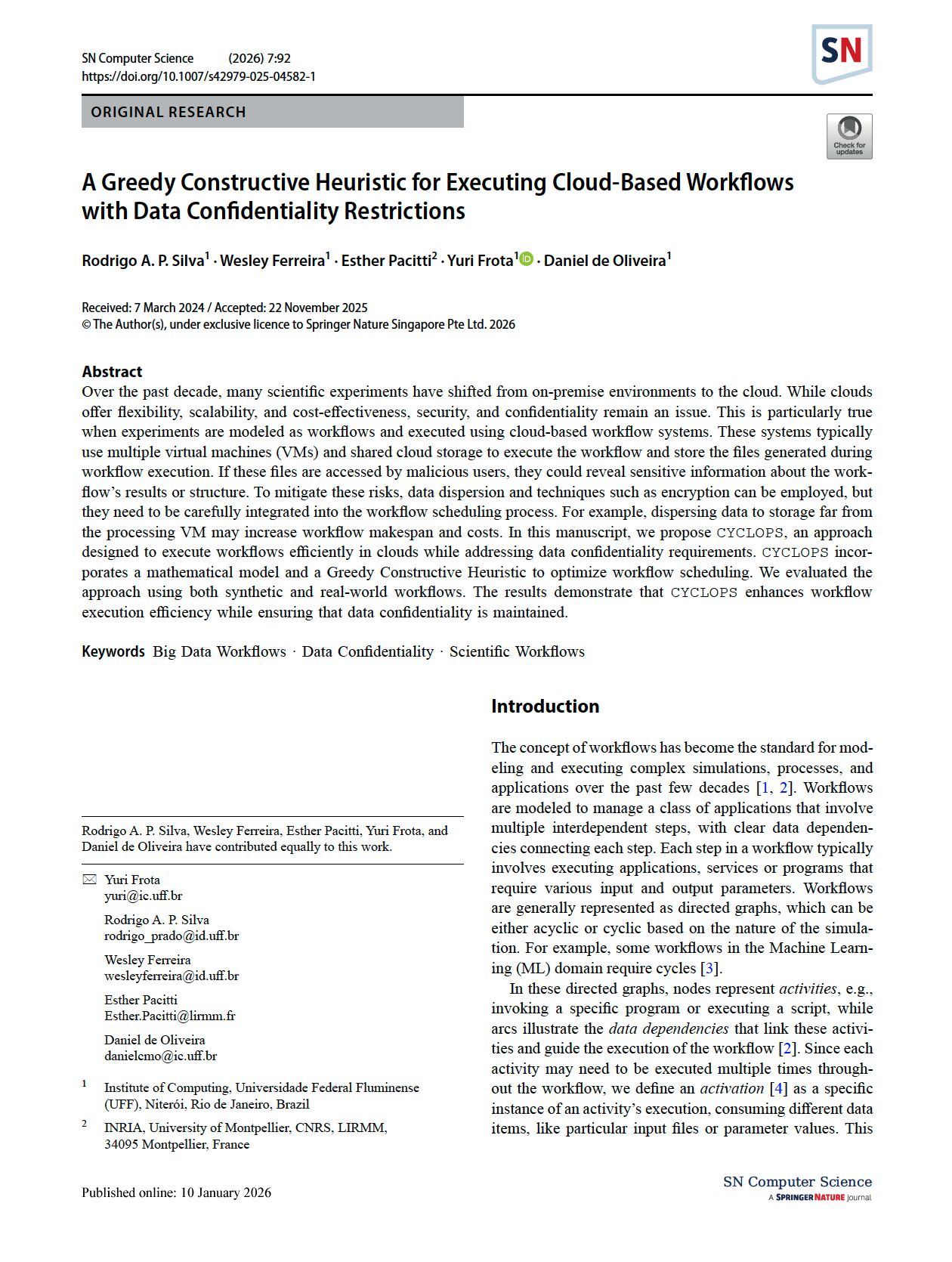
New paper out in SN Computer Science!
We’re excited to introduce CYCLOPS: a new approach for executing cloud-based scientific workflows with strong data confidentiality guarantees, without compromising performance or cost efficiency.
This work was led by Rodrigo A. P. Silva during his PhD, in collaboration with Wesley Ferreira, Esther Pacitti, Yuri Frota, and Daniel de Oliveira.
CYCLOPS tackles a key challenge: "How can we efficiently run complex, data-intensive workflows in public clouds while protecting sensitive data and preventing unintended information leakage?"
It addresses this problem by jointly optimizing workflow scheduling and data placement, rather than treating them as separate concerns.
⚠️ Important: CYCLOPS does not assume access to private or on-premise infrastructure. It is designed specifically for public cloud environments, where confidentiality must be enforced through intelligent scheduling, data dispersion, and awareness of heterogeneous security capabilities.
The full paper: https://lnkd.in/eZw6-kmW
Excited to see where this line of work goes next! 🚀
🇧🇷 (pt-br)
🎄 Feliz Natal!
Que este dia seja de tranquilidade, boas conversas e momentos significativos ao lado de quem importa.
🇺🇸 (en-us)
🎄 Merry Christmas!
May this season be filled with peace, good conversations, and meaningful moments with those who matter most.
O IDAC-Brasil se aproxima da fase final de aquisição de equipamentos e configurações para atender as necessidades do projeto Legacy Survey of Space and Time (LSST), o qual já iniciou oficialmente suas observações do céu.
Com a finalidade de apresentar os avanços realizados e também debater possíveis caminhos, o LIneA convidou especialistas membros do Comitê de Assessoramento Técnico (CAT) para as últimas tomadas de decisões acerca do IDAC brasileiro.
Para a reunião, Carlos Adean, coordenador de infraestrutura de TI, apresentou os avanços na montagem do IDAC-BR, os serviços e o apoio sendo prestados à comunidade e as compras em curso. Rodrigo Boufleur, cientista de dados, trouxe um levantamento das necessidades esperadas em relação ao poder computacional para atender a comunidade e suas pesquisas.
Os membros parabenizaram o volume de trabalho realizado pelo LIneA, que surpreende pela qualidade. Algumas sugestões foram feitas pelo comitê e estão sendo estudadas pela equipe.
🇧🇷 pt-br
Estamos encerrando 2025 com um sentimento de orgulho dos alunos e alunas, pelas parcerias construídas e pelos resultados alcançados ao longo do ano.
Ao todo, foram realizadas 4 defesas de mestrado — Ygor Rolim, Naira Arruda, Raíza Albuquerque e Jessica Monçores — e 1 defesa de doutorado, de Débora Pina (COPPE/UFRJ).
Ao longo de 2025, os membros do UFFeScience Research Group:
📄 Publicaram 8 artigos em periódicos científicos nacionais e internacionais, incluindo Concurrency and Computation, IEEE TVCG, PeerJ Computer Science e Informatics in Education.
🎤 Publicaram 22 artigos em conferências nacionais e internacionais, incluindo eventos como AAAI ICWSM, SIBGRAPI, SBBD, SSCAD, entre outros.
Esses resultados demonstram não apenas o volume, mas também a regularidade, a qualidade e a diversidade temática. Os trabalhos desenvolvidos em 2025 abordaram uma gama de desafios e áreas de pesquisa, incluindo:
- Dados de proveniência e rastreabilidade em workflows científicos
- Aprendizado profundo, LLMs e engenharia de prompts
- Visual analytics colaborativo e análise de dados urbanos
- Governança de dados, LGPD e privacidade
- HPC, computação em nuvem, contêineres e ambientes serverless
- Processamento de linguagem natural, análise de discurso de ódio e mídias sociais
- Aplicações em cidades inteligentes, petróleo e gás, astronomia e ciência de dados educacional
Tudo isso reforça o compromisso do grupo com uma pesquisa conectada a problemas reais da sociedade.
Em 2025, o trabalho dos nossos alunos e colaboradores também foi reconhecido com prêmios importantes:
🥇 Melhor Artigo na trilha Social Network and Media Analysis do ACM SAC 2025, com o trabalho de Annie Amorim, em colaboração com Gabriel Assis, Daniel de Oliveira e Aline Paes.
🥇 Melhor Artigo do Brazilian e-Science Workshop (BreSci 2025), com o trabalho de Paula W., em colaboração com Débora Pina, Liliane Kunstmann, Marta Mattoso e Daniel de Oliveira.
🥇 Melhor Demonstração do SBBD 2025, com o middleware AkôFlow (https://lnkd.in/eqdx_3iK), desenvolvido no contexto da dissertação de mestrado de Wesley Ferreira em colaboração com Raphael Reis Garcia, Liliane Kunstmann, Aline Paes, Marcos Bedo e Daniel de Oliveira.
🌟 Menção Honrosa entre as melhores teses de doutorado do SBBD 2025, para o trabalho de Débora Pina (COPPE/UFRJ), orientado pela Profa. Marta Mattoso e pelo Prof. Daniel de Oliveira.
Esses resultados também refletem parcerias com outras universidades e grupos de pesquisa no Brasil e no exterior, reforçando os princípios da ciência aberta, da colaboração e da interdisciplinaridade.
Parabéns a todos e todas que constroem o UFFeScience Research Group todos os dias. Que 2026 venha com ainda mais ciência de qualidade, impacto e formação de pessoas 🚀
#UFFeScience #PesquisaCientífica #CiênciaDeDados #IA #LLMs #WorkflowsCientíficos #VisualAnalytics #HPC #OrgulhoDeSerUFF
🇺🇸 en-us
We are proud to announce that Wesley Ferreira, a member of the UFFeScience Research Group and a master’s student at the Instituto de Computação of the Universidade Federal Fluminense, has received the Outstanding Student Award from the Brazilian Computer Society (SBC)! 🎉
Established in 2003, the Outstanding Student Award recognizes the top Computer Science students in Brazil. It highlights those who excel academically while making meaningful contributions to research and university initiatives — and Wesley is a remarkable example of this!
Congratulations to Wesley on this well-deserved achievement! This is just the beginning! 👏
🇧🇷 pt-br
É com grande orgulho que compartilhamos que Wesley Ferreira, mestrando do programa UFFeScience Research Group, foi reconhecido com o prêmio Estudante Destaque da SBC! 🎉
Criado em 2003, o prêmio Estudante Destaque da Sociedade Brasileira de Computação - SBC homenageia os melhores estudantes de Computação do país. A honraria é concedida a alunos e alunas que se destacam por sua excelência acadêmica, pesquisa e ações de extensão — e Wesley é um exemplo dessa trajetória.
Parabenizamos o Wesley por essa conquista incrível e pelo impacto que vem gerando na comunidade científica. Que esse reconhecimento seja apenas um dos muitos que virão! 👏
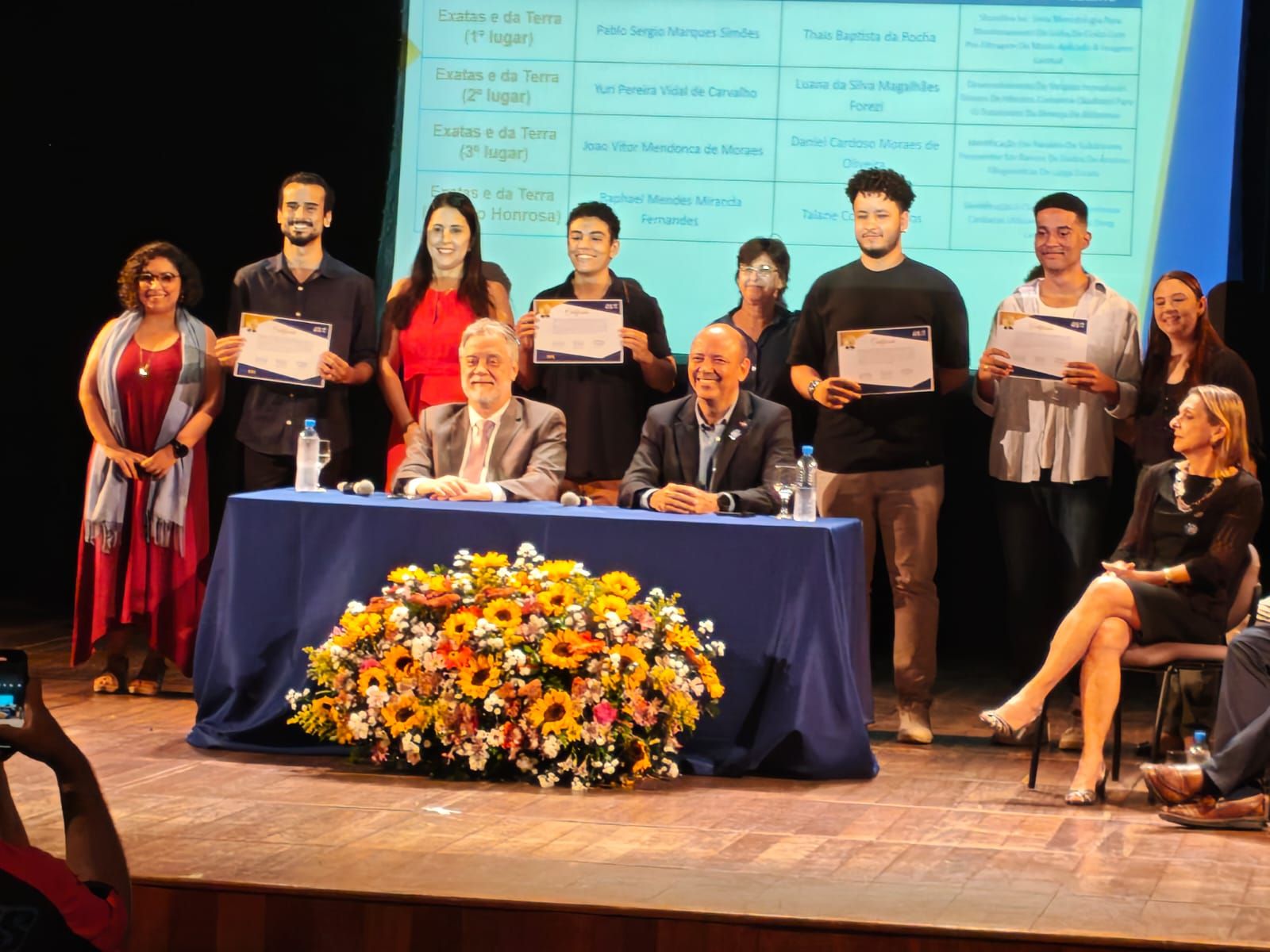
O discente João Vitor Moraes, do curso de Ciência da Computação e membro do UFFeScience Research Group, recebeu hoje o terceiro lugar no prêmio UFF de Iniciação Científica, na área de Ciências Exatas, com o trabalho intitulado:
“Identificação em Paralelo de Subárvores Frequentes em Bancos de Dados de Árvores Filogenéticas de Larga Escala”.
O trabalho foi orientado pelos professores Daniel de Oliveira e Isabel Rosseti.
👏 Parabéns ao João e aos orientadores pelo excelente resultado e pela dedicação à pesquisa! Nós do UFFeScience Research Group estamos muito orgulhosos!
#UFF
#IniciaçãoCientífica
#CiênciasExatas
#Pesquisa
#ComputaçãoCientífica
#Bioinformática
#UFFeScience
#OrgulhoUFF
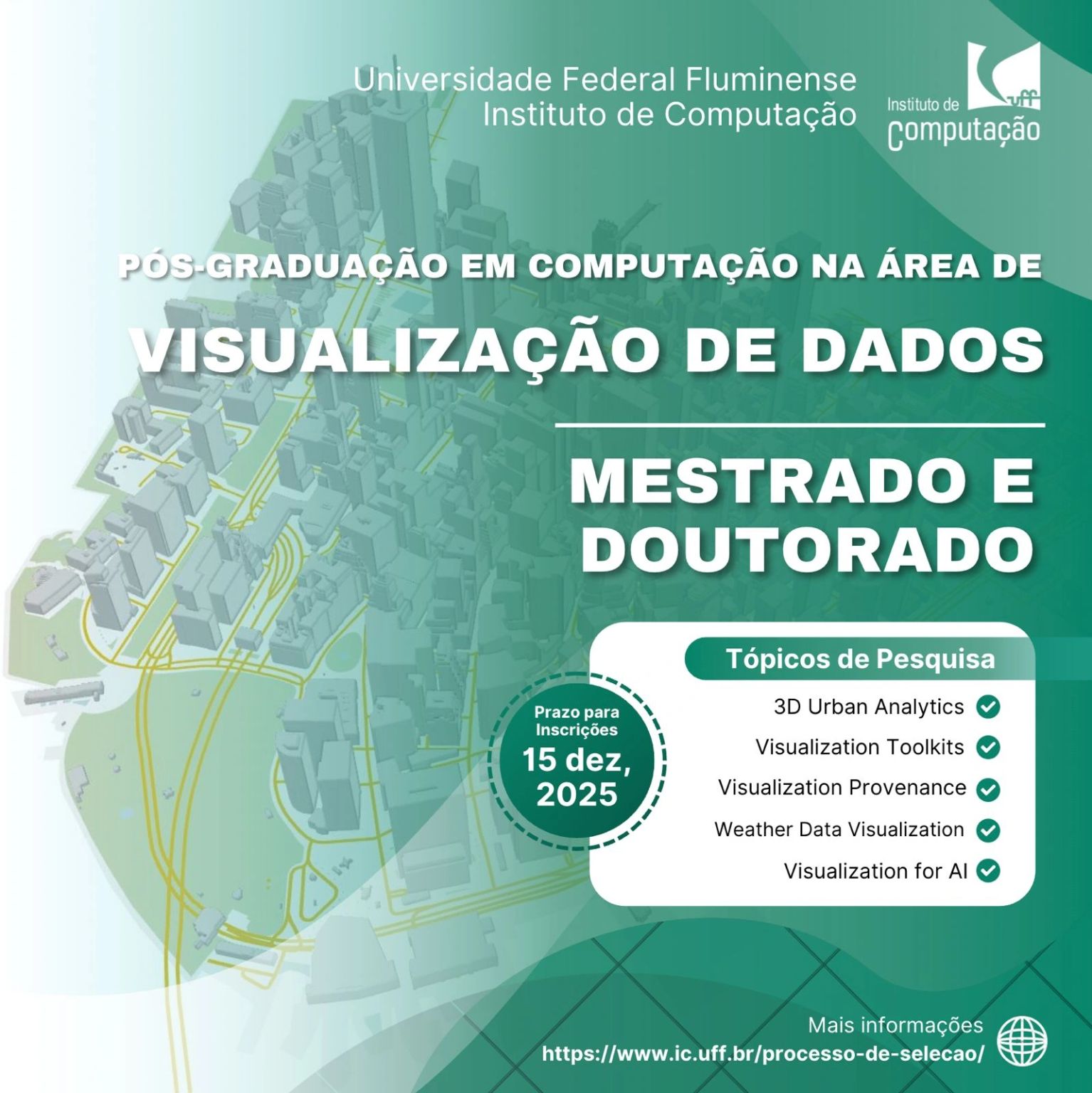
📣 Chamada para Seleção 2026/1 - Mestrado e Doutorado em Computação na área de VISUALIZAÇÃO DE DADOS!
O Programa de Pós-graduação em Computação (PGC) do Instituto de Computação da Universidade Federal Fluminense (UFF) está com as inscrições abertas para o processo seletivo de 2026/1!
O PGC conta com conceito 6 na CAPES e uma infraestrutura de ponta, tudo com uma vista incrível da Baía de Guanabara, no campus da Praia Vermelha em Niterói.
Em especial, nossos tópicos de pesquisa na área de Visualização de Dados incluem:
🔹 3D Urban Analytics
🔹 Visualization Toolkits
🔹 Visualization Provenance
🔹 Weather Data Visualization
🔹 Visualization for AI
🗓️ Período de Inscrições: 10/11/2025 a 15/12/2025
🔗 Mais informações em: https://lnkd.in/dG-FHwpg
Aproveite essa oportunidade e venha fazer parte de um programa de excelência!
🇺🇸 (en-us)
Congratulations to Camila Lopes and Wesley Ferreira! 👏
We are very proud to congratulate Camila Lopes and Wesley Ferreira for their participation and excellent presentations at SSCAD 2025, held in Bonito, Brazil.
🌌 Camila Lopes presented the paper “Federated Outlier Detection for Astronomical Data: Performance Analysis on Commercial Clouds”
authored by Camila Lopes (UFF), Wesley Ferreira (UFF), Julia Gschwend, Luiz Nicolaci da Costa (LIneA), Rafael Ferreira da Silva (ORNL), Marta Mattoso (COPPE/UFRJ), Aline Paes (UFF), and Daniel de Oliveira (UFF). Link: https://lnkd.in/dhrPkHMR
🎓 Wesley Ferreira presented the paper “A Weighted Bi-objective Strategy for Executing Scientific Workflows in Containerized Environments”
authored by Wesley Ferreira (UFF), Liliane Kunstmann (IMPA), Yuri Abitbol Frota (UFF), Luan Teylo (INRIA Bordeaux University), and Daniel de Oliveira (UFF). Link: https://lnkd.in/dptpQa7t
Congratulations to both for their dedication and contributions to the fields of scientific workflows and federated learning applied to astronomy!
🇧🇷 (pt-br)
Parabéns à Camila Lopes e ao Wesley Ferreira! 👏
É com muita satisfação que parabenizamos Camila Lopes e Wesley Ferreira pela participação e excelente apresentação de seus trabalhos no SSCAD 2025, realizado em Bonito, MS.
Camila Lopes apresentou o trabalho “Federated Outlier Detection for Astronomical Data: Performance Analysis on Commercial Clouds” de autoria de Camila Lopes (UFF), Wesley Ferreira (UFF), Julia Gschwend, Luiz Nicolaci da Costa (LIneA), Rafael Ferreira da Silva (ORNL), Marta Mattoso (COPPE/UFRJ), Aline Paes (UFF) e Daniel de Oliveira (UFF). Link: https://lnkd.in/dhrPkHMR
Wesley Ferreira apresentou o trabalho “A Weighted Bi-objective Strategy for Executing Scientific Workflows in Containerized Environments”
de autoria de Wesley Ferreira (UFF), Liliane Kunstmann (IMPA), Yuri Abitbol Frota (UFF), Luan Teylo (INRIA Bordeaux University) e Daniel de Oliveira (UFF). Link: https://lnkd.in/dptpQa7t
Parabéns a ambos pela dedicação e pelas contribuições nas áreas de workflows científicos e aprendizado federado aplicado à astronomia!
O discente João Vitor Moraes, membro do UFFeScience Research Group, conquistou o terceiro lugar na Jornada de Iniciação Científica da Universidade Federal Fluminense, na área de Ciências Exatas, com o trabalho intitulado:
“Identificação em Paralelo de Subárvores Frequentes em Bancos de Dados de Árvores Filogenéticas de Larga Escala”.
O trabalho foi orientado pelos professores Daniel de Oliveira e Isabel Rosseti, e representa uma contribuição para o avanço das pesquisas em computação científica e bioinformática.
👏 Parabéns ao João e aos orientadores pelo excelente resultado e pela dedicação à pesquisa!
#UFF #IniciaçãoCientífica #CiênciasExatas #Pesquisa #ComputaçãoCientífica #Bioinformática #UFFeScience #OrgulhoUFF
🇧🇷 (pt-br)
Essa semana tivemos a apresentação de dois membros do UFFeScience Research Group na Semana da Computação 2025 do Instituto de Computação UFF
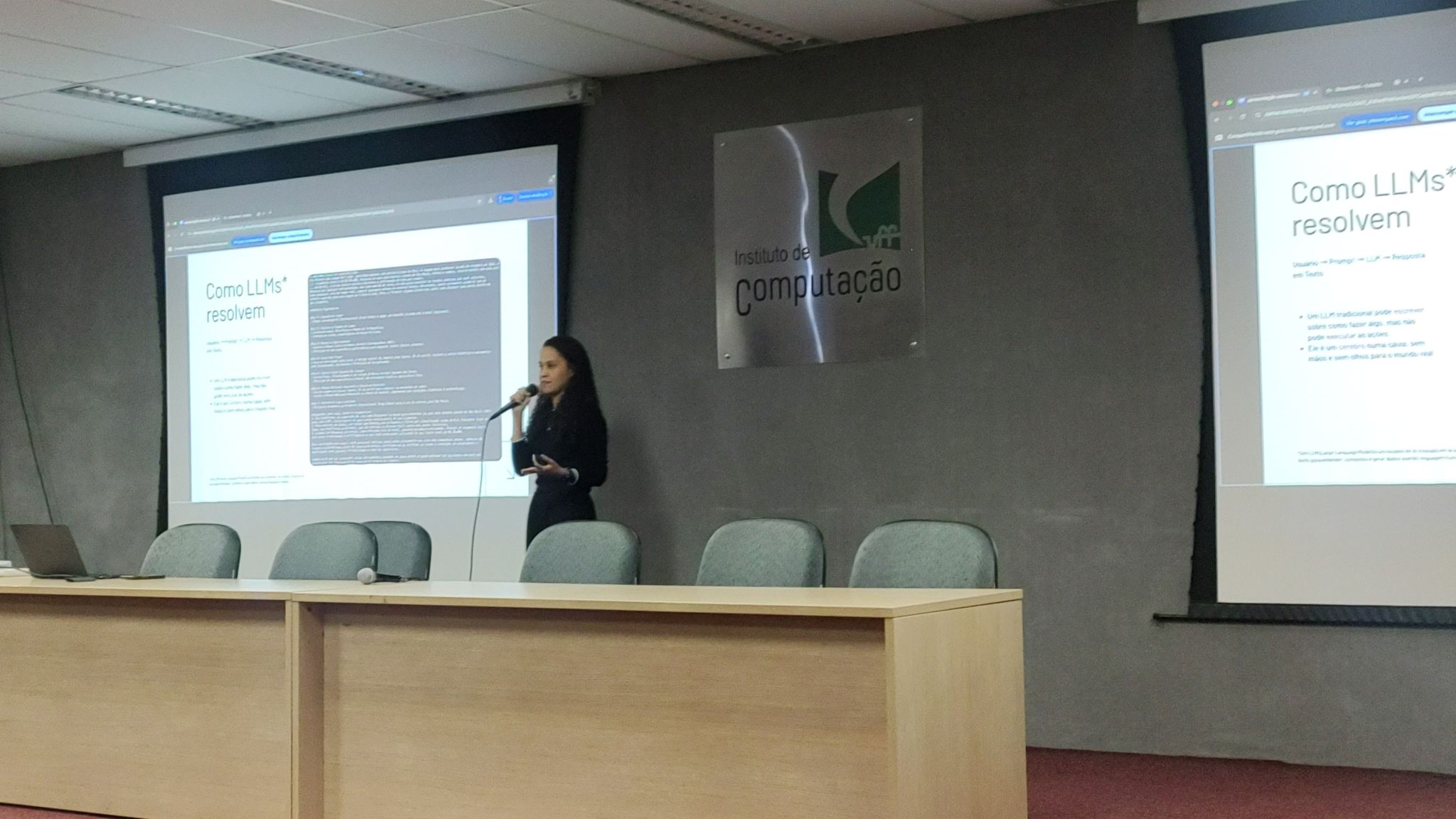
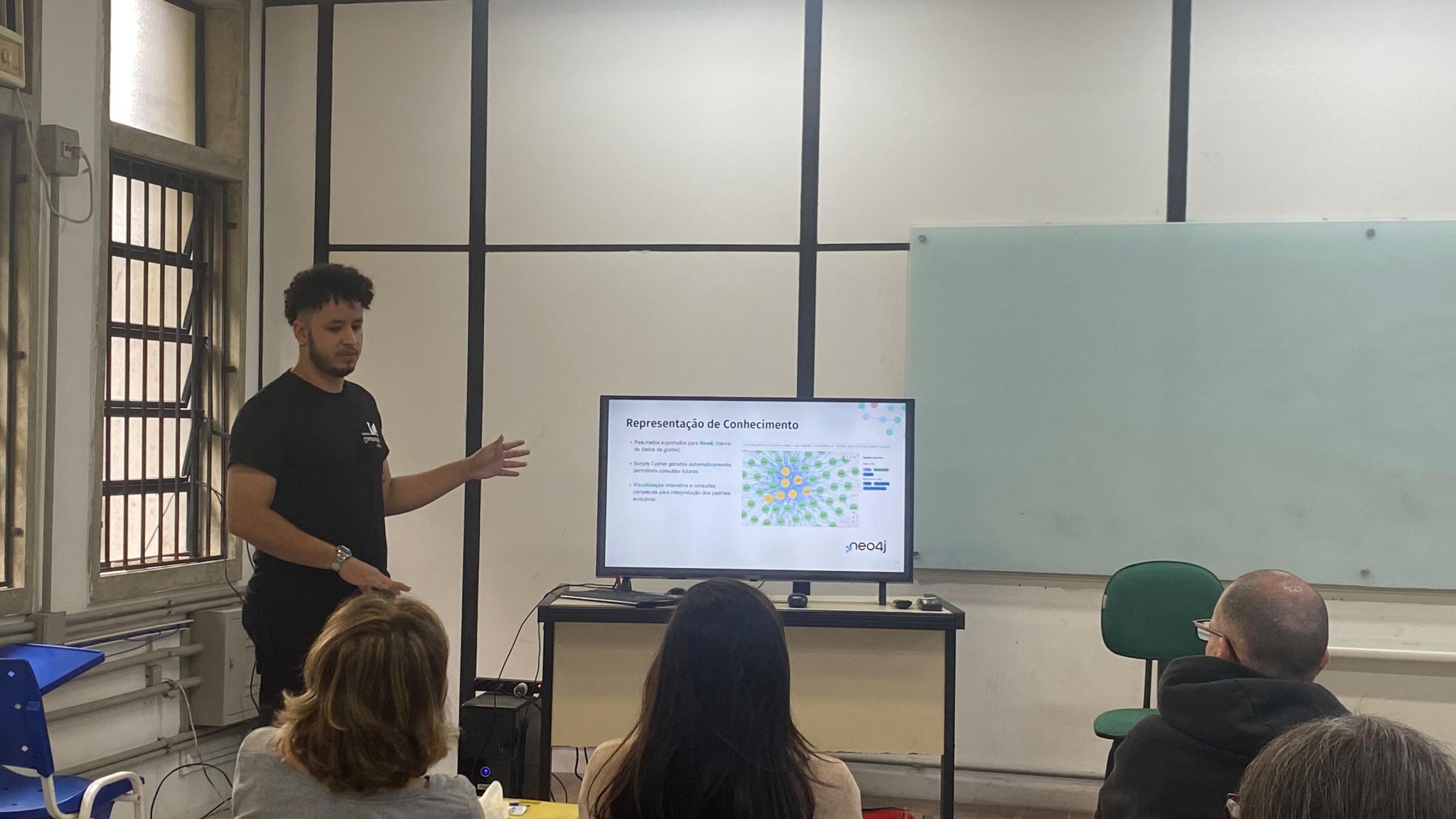
💡 Wesley Ferreira com a palestra “Construindo e Executando Workflows com o AkôFlow e Kubernetes”, mostrando como orquestrar workflows complexos de maneira eficiente e escalável.
💡 Valesca Moura apresentou “Workflows com vida própria (mas sob controle!): Uma breve introdução aos agentic workflows”, trazendo insights sobre workflows autônomos com supervisão inteligente.
Parabéns Wesley e Valesca!
#SemanaDaComputação2025 #UFFeScience #Workflows #Kubernetes #AkôFlow #Inovação #Tecnologia
🇺🇸 (en-us)
This week featured presentations by two members of UFFeScience Research Group at the Computing Week 2025 of Instituto de Computação UFF
💡 Wesley Ferreira presented “Building and Executing Workflows with AkôFlow and Kubernetes”, showcasing how to efficiently orchestrate complex workflows at scale.
💡 Valesca Moura presented “Workflows with a Life of Their Own (but Under Control!): A Brief Introduction to Agentic Workflows”, providing insights on autonomous workflows with intelligent supervision.
Congratulations Wesley and Valesca!
#ComputingWeek2025 #UFFeScience #Workflows #Kubernetes #AkôFlow #Innovation #Technology
🇺🇸 (en-us)
João Vitor Moraes presented his research "Parallel Identification of Frequent Subtrees in Large-Scale Phylogenetic Tree Databases" at the Universidade Federal Fluminense 2025 Undergraduate Research Seminar, representing the UFFeScience Research Group.
The work, supervised by Professors Daniel de Oliveira and Isabel Rosseti, was selected as one of the Top 10 projects in the Exact Sciences category! 🎉
Next Friday, October 24th, João will present again, competing for the Best Research Award.
Congratulations, João, for your work and dedication to this project!
#UFF #Research #UndergraduateResearch #Science #UFFeScience
🇧🇷 (pt-br)
João Vitor Moraes apresentou o trabalho "Identificação em Paralelo de Subárvores Frequentes em Bancos de Dados de Árvores Filogenéticas de Larga Escala" no Seminário de Iniciação Científica da Universidade Federal Fluminense 2025, representando o grupo UFFeScience.
O trabalho, orientado pelos Profs. Daniel de Oliveira e Isabel Rosseti, foi selecionado entre os 10 melhores da área de Ciências Exatas! 🎉
Na próxima sexta-feira, 24/10, João apresentará novamente, concorrendo ao melhor trabalho do seminário.
Parabéns, João, pelo excelente trabalho e pela dedicação ao projeto!
#UFF #IniciaçãoCientífica #Pesquisa #UFFeScience #Ciência #OrgulhoUFF
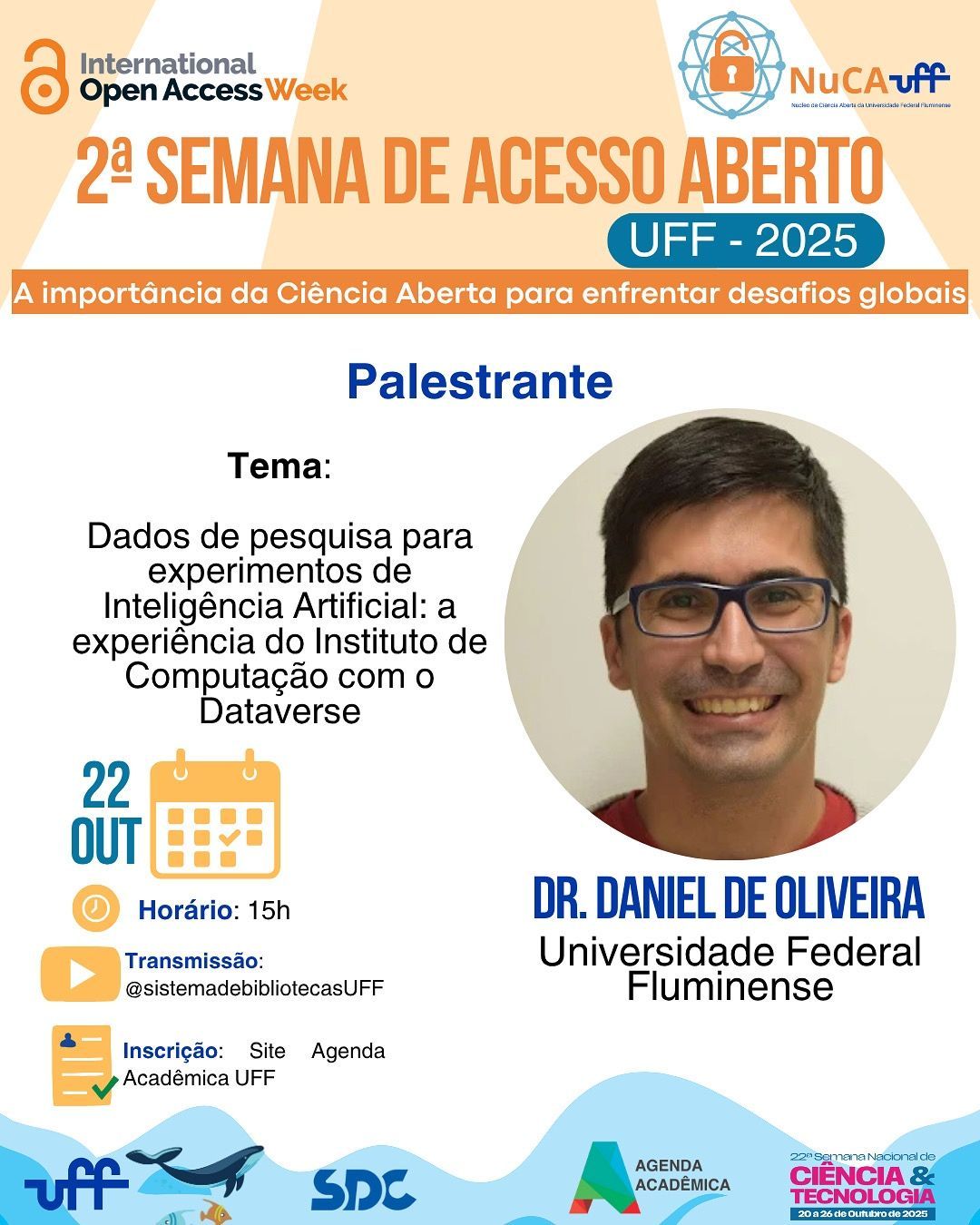
Presença do UFFeScience Research Group 2ª Semana de Acesso Aberto da UFF!
No dia 22 de outubro, o Prof. Daniel de Oliveira apresentará a palestra "Dados de pesquisa para experimentos de Inteligência Artificial: a experiência do Instituto de Computação com o Dataverse".
A atividade integra a 2ª Semana de Acesso Aberto da UFF, evento que promove a discussão sobre ciência aberta, repositórios de dados e boas práticas de compartilhamento de informação científica.
📅 Data: 22/10
🕕 Horário: 15:00
📺 Transmissão ao vivo: https://lnkd.in/dBZuxT3H
#UFF #AcessoAberto #CiênciaAberta #Dataverse #InteligênciaArtificial #Pesquisa #Reprodutibilidade
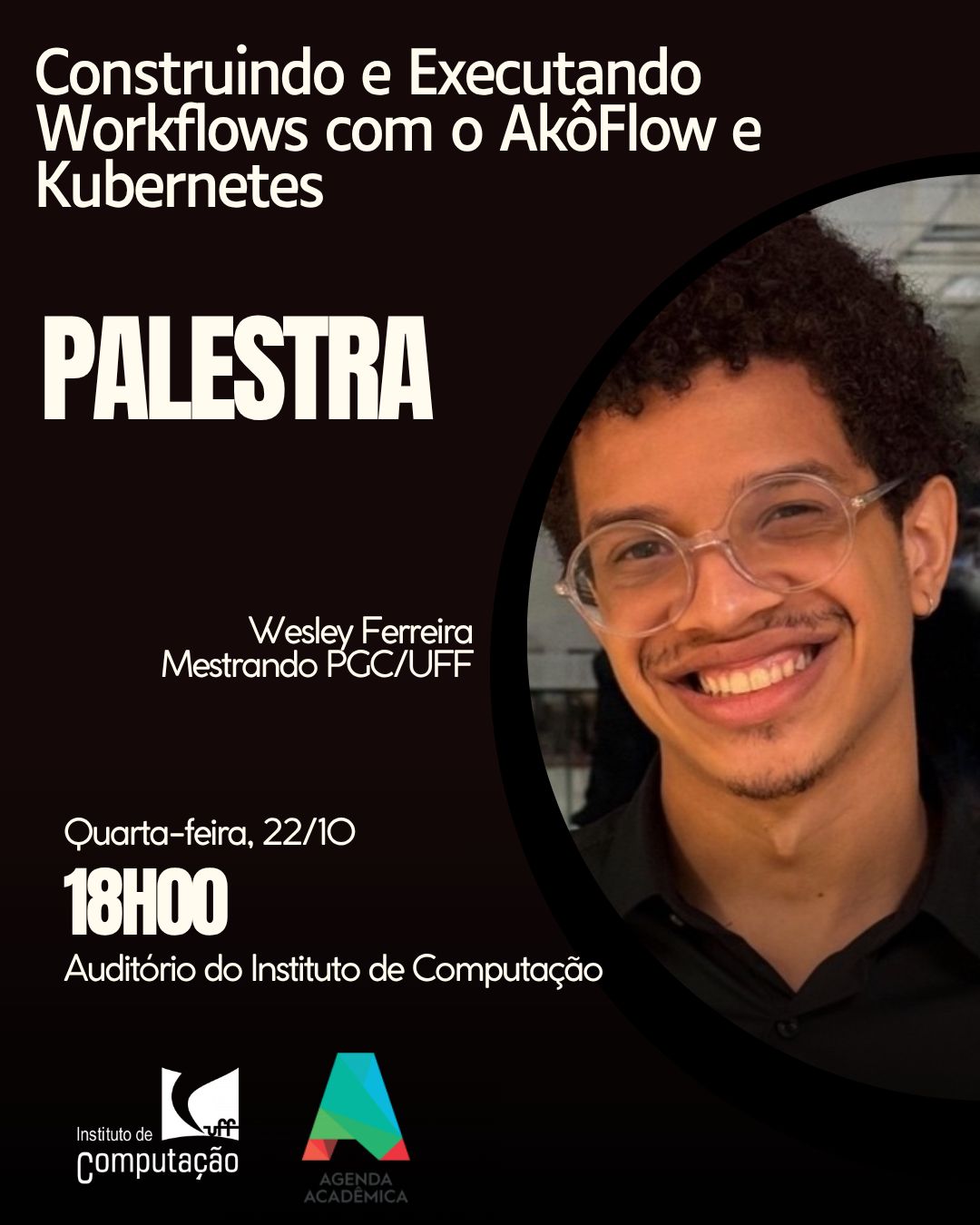
💻 Palestra na 9ª Semana da Computação do Instituto de Computação da Universidade Federal Fluminense!
No dia 22/10, às 18h, Wesley Ferreira, do UFFeScience Research Group e mestrando em Computação do PGC/UFF, apresentará a palestra:
🎙️ “Construindo e Executando Workflows com o AkôFlow e Kubernetes”
O encontro acontecerá no Auditório do Instituto de Computação – Campus da Praia Vermelha (UFF) e abordará, na prática, como automatizar e orquestrar workflows utilizando Kubernetes e a ferramenta AkôFlow, desenvolvida com foco em flexibilidade e escalabilidade.
📅 Data: 22 de outubro
🕕 Horário: 18h às 19h
📍 Local: Auditório do Instituto de Computação – Campus da Praia Vermelha
🔗 Inscrições a partir de 16/10: https://lnkd.in/dkT8V3cn
Uma ótima oportunidade para quem se interessa por computação em nuvem, automação de workflows e infraestrutura escalável! ☁️⚙️
#SemanaDaComputaçãoUFF #UffeScience #Palestra #AkôFlow #Kubernetes #Workflows #CiênciaDeDados #UFF
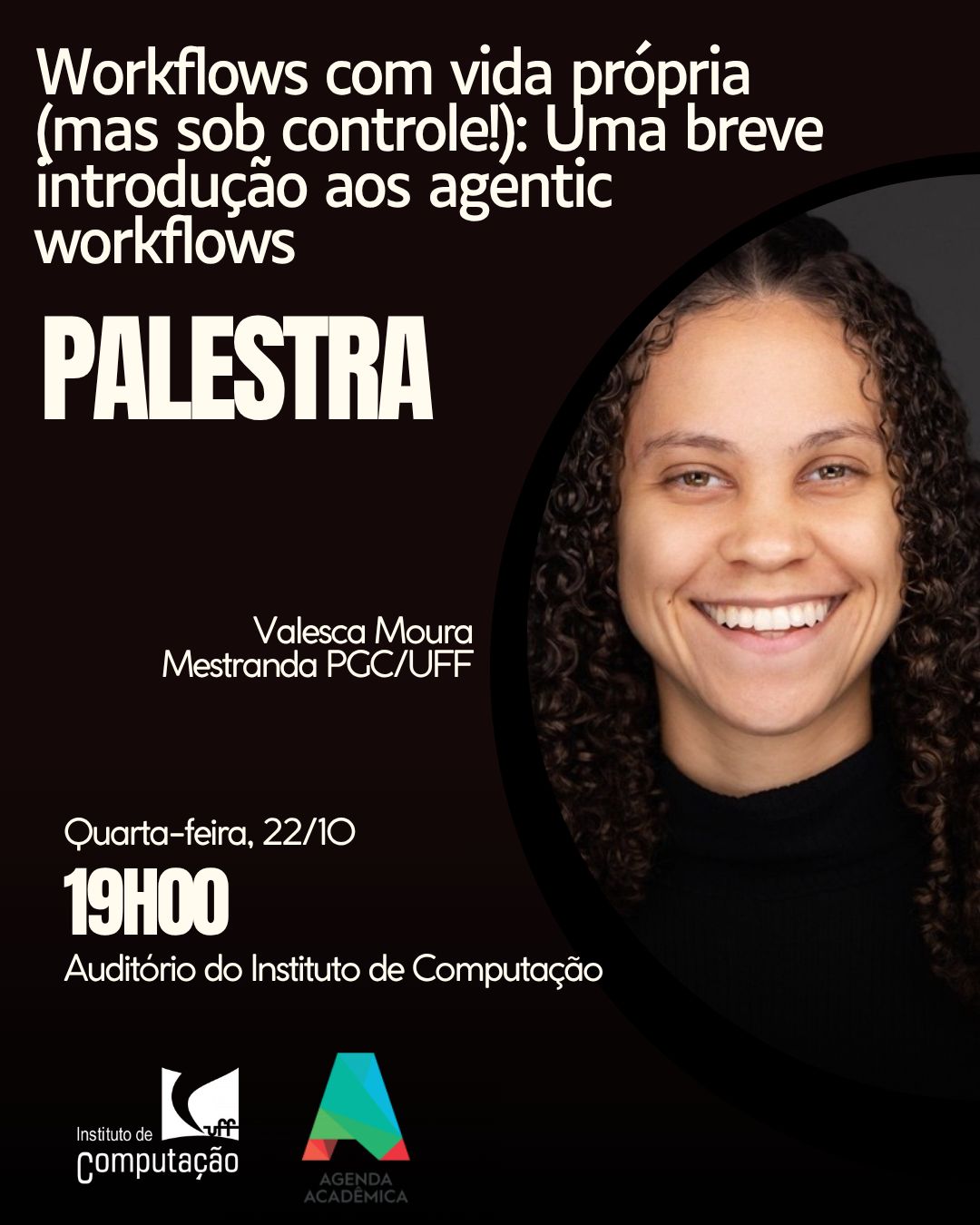
Palestra na Agenda Acadêmica 2025 da Universidade Federal Fluminense!
No dia 22/10, às 19h, a aluna Valesca Moura, do UFFeScience Research Group e mestranda em Computação no PGC/UFF, apresentará a palestra:
🎙️ “Workflows com vida própria (mas sob controle!): Uma breve introdução aos agentic workflows”
O evento é presencial e acontece no Auditório do Instituto de Computação no Campus da Praia Vermelha (UFF). A palestra apresentará uma introdução ao conceito de agentic workflows, explorando como workflows podem ganhar autonomia sem perder a governança.
📅 Data: 22 de outubro
🕖 Horário: 19h às 20h
📍 Local: Auditório do Instituto de Computação – Campus da Praia Vermelha
🔗 Inscrições a partir de 16/10: https://lnkd.in/dmisB7wm
Venha participar e conhecer mais sobre esse tema emergente que conecta automação, inteligência artificial e ciência de dados! 💡
#AgendaAcadêmicaUFF #UffeScience #Palestra #AgenticWorkflows #CiênciaDeDados #InteligênciaArtificial #UFF
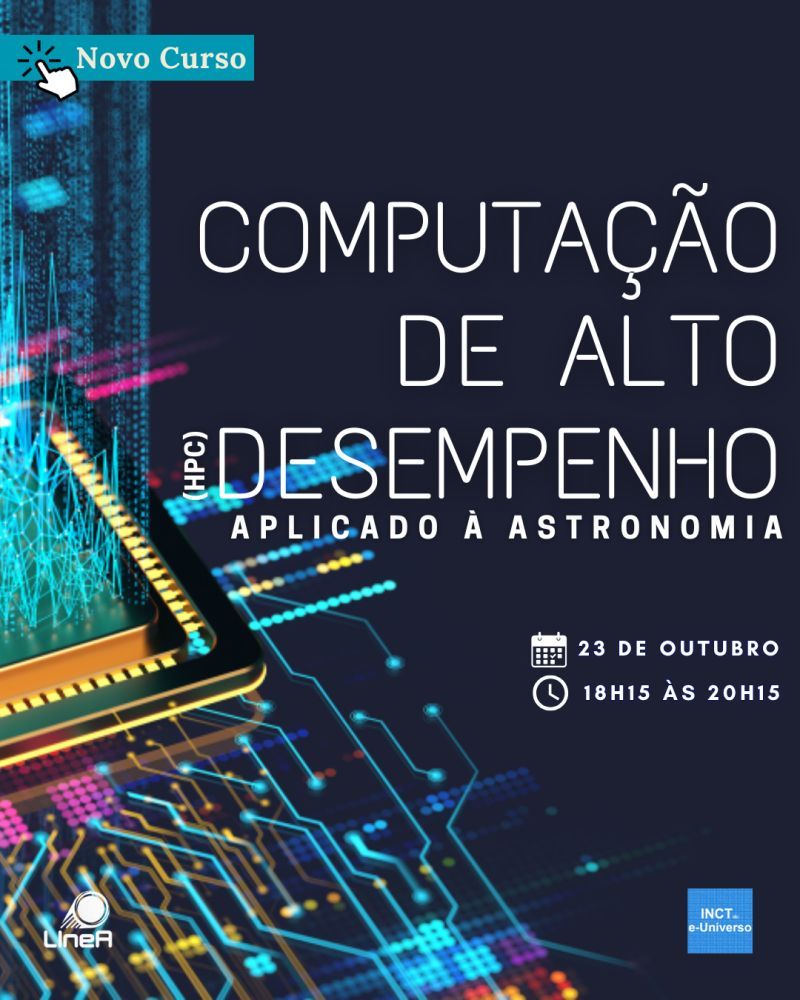
🇧🇷 (pt-br) Interessado por Astronomia e Computação de Alto Desempenho (HPC)?
O Laboratório Interinstitucional de e-Astronomia está oferecendo um curso especializado de HPC para Astronomia — uma ótima oportunidade para explorar como a computação avançada impulsiona a pesquisa moderna em astronomia.
Aprenda com especialistas, trabalhe com dados reais e conecte-se com a comunidade de astronomia e ciência de dados!
🔗 Mais informações: https://lnkd.in/drdPweMN
#Astronomia #HPC #LIneA #DataScience #Pesquisa
🇺🇸 (en-us) Interested in Astronomy and High-Performance Computing?
The Laboratório Interinstitucional de e-Astronomia is offering a specialized HPC for Astronomy course (in portuguese) — a great opportunity to explore how advanced computing powers modern astronomy research.
💡 Learn from experts, work with real data, and connect with the astronomy + data science community!
🔗 For more information: https://lnkd.in/drdPweMN
#Astronomy #HPC #LIneA #DataScience #Research
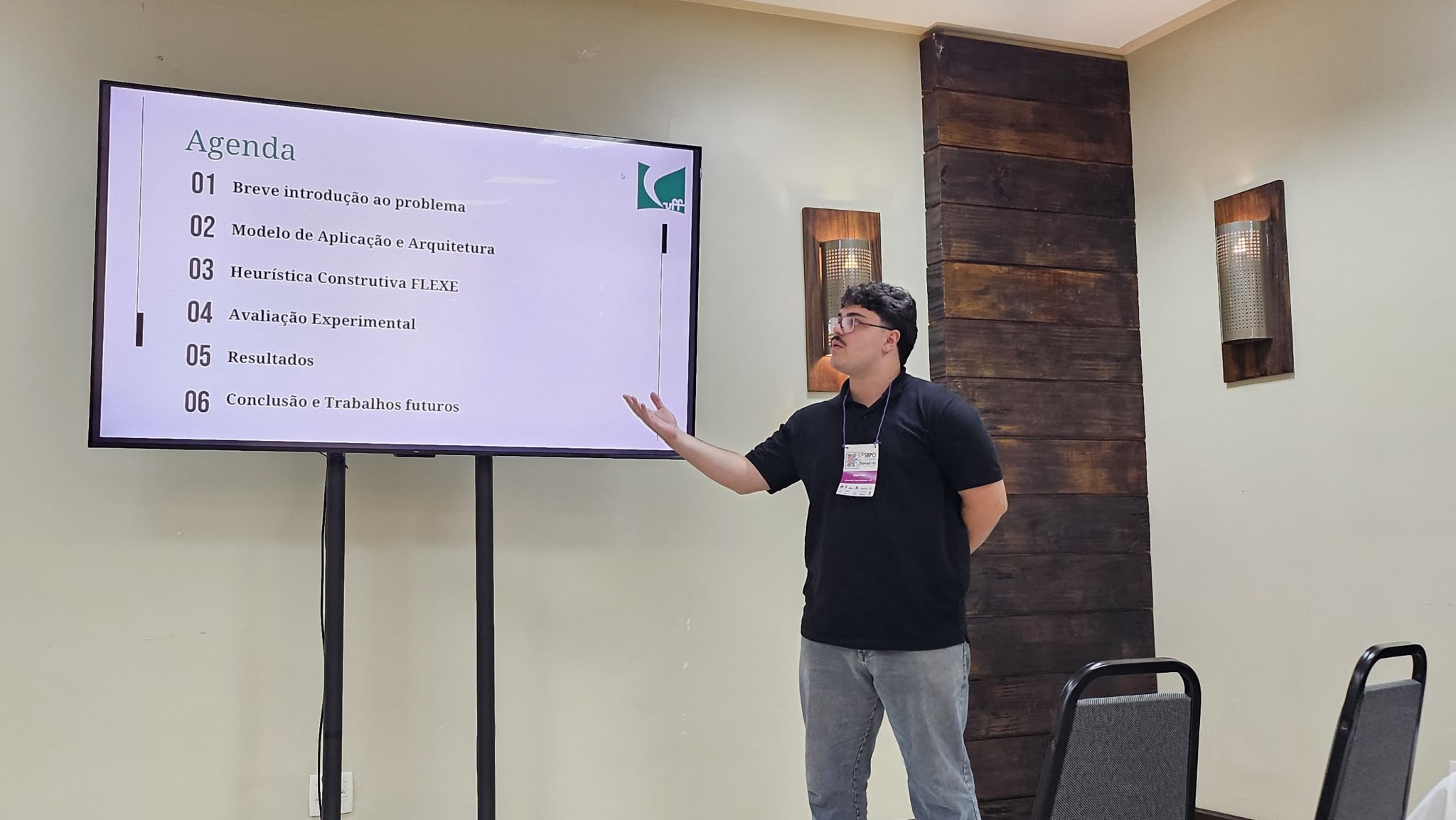
🇺🇸 (en-us) UFFeScience Research Group participated in SBPO 2025 in Gramado!
Miguel B. Jehle presented the paper “Between Virtual Machines and Serverless Functions: A Heuristic Approach for Scheduling Scientific Workflows in Cloud Environments”, co-authored with Marcello Ribeiro, UBIRATAM CARVALHO DE PAULA JUNIOR , Yuri Frota, Isabel Rosseti, and Daniel de Oliveira.
The paper introduces the FLEXE heuristic, which schedules scientific workflows in both virtual machines and serverless functions balancing cost and performance.
Congratulations to Miguel for the presentation and to the team for the results achieved!
🇧🇷 (pt-br) Participamos do SBPO 2025 em Gramado!
O aluno Miguel Jehle apresentou o artigo “Entre Máquinas Virtuais e Funções Serverless: Uma Abordagem Heurística para o Escalonamento de Workflows Científicos em Nuvens de Computadores”, desenvolvido com Marcello Ribeiro, Ubiratam Paula, Yuri Frota, Isabel Rosseti e Daniel de Oliveira.
O trabalho propõe a heurística FLEXE, que escalona workflows em máquinas virtuais e funções serverless considerando custo e desempenho.
Parabéns ao Miguel pela excelente apresentação e ao grupo pelo resultado!

 UFFeScience Research Group